
Public paper money was born in America, not in Europe. On 10 December 1690 Massachusetts authorized “bills of credit” to finance a war; the U.S. Currency Education Program and the Newman Numismatic Portal record it as the first public paper money in the Western world. The thirteen colonies followed the model. In 1775 the Continental Congress issued the Continentals: unbacked and counterfeited by the enemy, their collapse in value coined the expression “not worth a Continental.”
In the nineteenth century everyday trade ran on state-bank notes — obsolete or broken banknotes in the jargon, catalogued by Haxby. The American Numismatic Society places the end of that plurality in the Civil War: a 10 percent tax on private paper and the National Banking Act of 1863, which introduced National Bank Notes (1863–1935). The first federal paper of general circulation was the Demand Notes of 1861 — the origin of the nickname “greenback”; United States Notes of 1862 replaced them as legal tender. Coin hoarding brought Fractional Currency (1862–1876). In the South the unbacked Confederate grayback circulated through the act of 17 February 1864.
Gold Certificates (1865), Silver Certificates (1878), and Treasury or Coin Notes of 1890–1891, authorized by the Sherman Silver Purchase Act, followed. The 1896 Educational Series — History Instructing Youth — is a Silver Certificate issue, not a Coin Note. The Federal Reserve Act of 1913 created the central bank and two kinds of paper: Federal Reserve Notes and, as emergency currency, Federal Reserve Bank Notes. In 1929 the BEP cut the format by about 30 percent — printed Series 1928, eight notes per sheet to twelve — the line that divides large size from small size. The BEP stopped delivering United States Notes in 1971; today only FRNs are issued. The Second World War marked silver certificates and FRNs with the HAWAII overprint and the 1935-A yellow-seal $1 for North Africa.
This case is not a complete catalog of United States notaphily: it is the inventory of the pieces that will be documented here, with Friedberg, Haxby, Schwan, Criswell, or Pick references when they exist. The Continental $5 of 14 January 1779 (Fr. CC-91; the manuscript serial is unreadable), the State Bank at New Brunswick $1 remainder (Haxby NJ-350 G16a), the City Bank of New Haven $5 remainder (Haxby CT-265 G52b, plate A, no serial), the Canal Bank of New Orleans $50 remainder (Haxby LA-105 G46a, plate D, no serial), the Confederate T-40 $100 of August 1862, serial 36830, the 1864 Confederate T-69 $5, serial 6164, the T-67 $20, serial 74523, the Series 1934 Chicago Federal Reserve Note $10, serial G30986728A, the Series 1934A $10 of the same district, serial G74025286A, the Series 1934A Cleveland $10, serial D78652996A, the Series 1934D Richmond $10, serial E60822246B, the Series 1934A New York $500, serial B00286799A, the Series 1934A New York $1,000, serial B00411221A, the Series 2003 Atlanta $1 star replacement F05033622★, the Series 2003 St. Louis $2 star replacement H00010418★, the Series 1957-B $1 Silver Certificate, serial S35513454A, and, under Miscellaneous, the Series 2006 Dallas $1 stamped for Where’s George?, serial K46602688C, the uniface Giori Lincoln Memorial test note, ca. 1970s, with no serial, the 1933 Baraboo 5¢ scrip, John Ringling, serial A4895, the 10¢ of the same scrip, Chas. Ringling, serial A2844, the 15¢, Al. T. Ringling, serial A2819, and the $1, Ringling Bros., serial A2002, already have note pages. Further pieces will be published as they are photographed, as in the Philippines case. Rency pop art, Military Payment Certificates, USDA food coupons, and other test notes belong here as well.
This country’s struck coin is documented in the numismatics case. United States · Numismatics
1690–1788
Colonial paper
The first public paper of the Western world: Massachusetts bills of credit and Continental Currency.
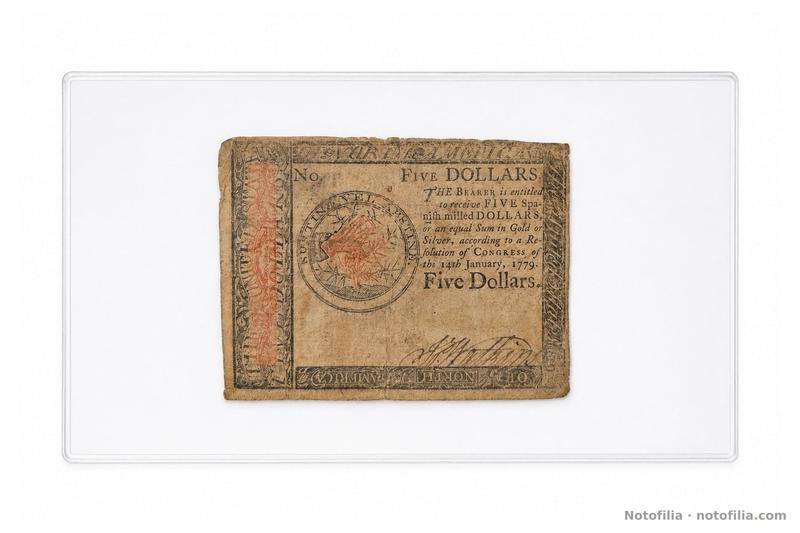
On 10 December 1690 the Massachusetts Bay General Court authorized £7,000 in bills of credit to pay for an expedition against Canada. The Newman Numismatic Portal and the U.S. Currency Education Program agree: it was the first public paper money in the Western world. The other colonies copied the expedient. In 1775 the Continental Congress issued Continentals to finance independence; inflation and British counterfeiting left them “not worth a Continental.” The $5 of 14 January 1779, Friedberg CC-91, with the SUSTINE VEL ABSTINE emblem, already has a note page; the manuscript serial is not readable on this photograph. Provincial issues such as Pennsylvania 1773 and the New Jersey six-shillings of 1776 also belong in this case.
1782–1866
Obsolete notes
State banks, broken banknotes, and the tax that ended private issue.
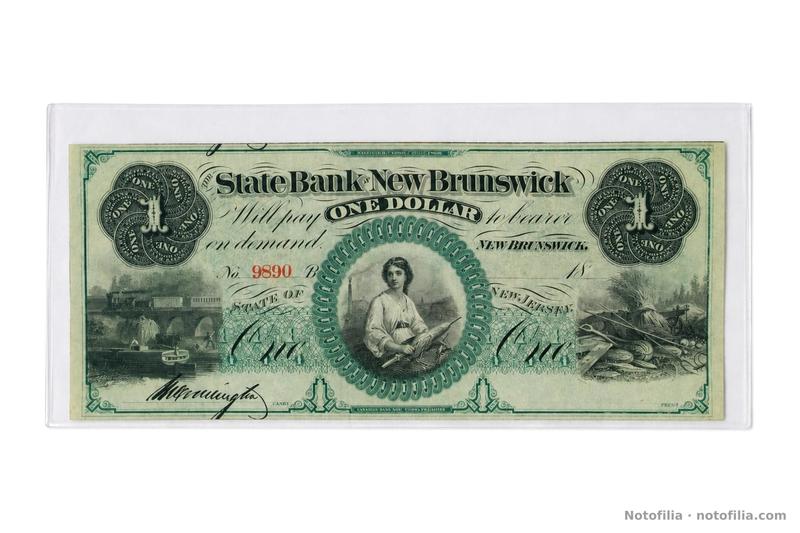
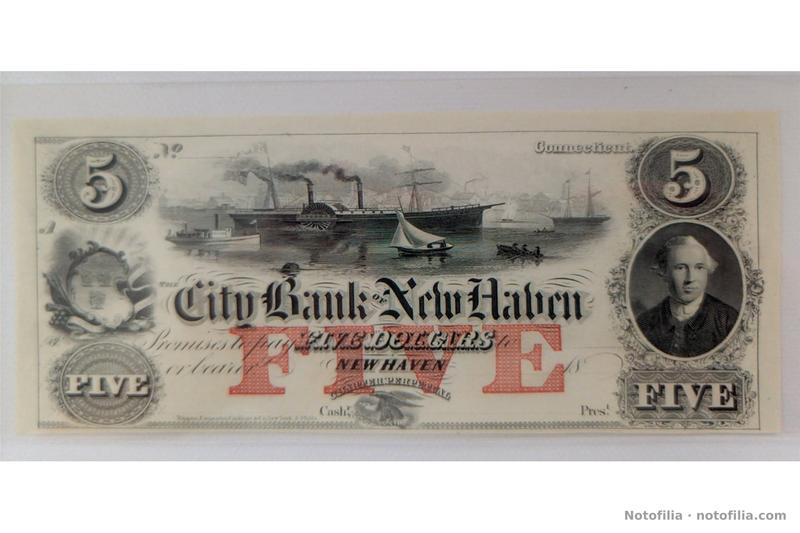
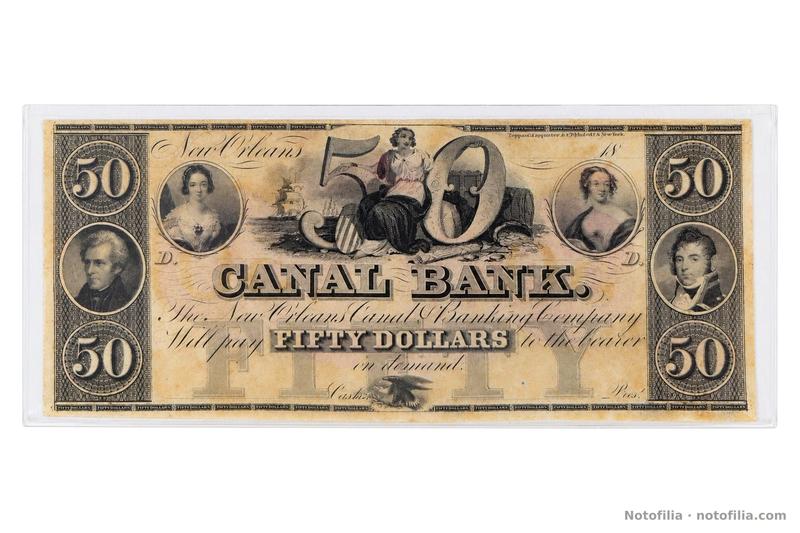
After the Constitution, everyday paper came from state-chartered banks — the First Bank of the United States (1791) was only the first of many. Thousands of plates, often engraved in New York or Philadelphia, circulated with uneven convertibility: collectors call them obsolete or broken banknotes, catalogued by Haxby. The American Numismatic Society notes that a 10 percent tax on private paper and the National Banking Act of 1863 unified the national currency during the Civil War: the federal successor of this paper is the National Bank Note, in its own chapter. The $1 remainder of the State Bank at New Brunswick, serial 9890 · B, the $5 remainder of the City Bank of New Haven, Haxby CT-265 G52b, plate A, with no serial, and the $50 remainder of the Canal Bank of New Orleans, Haxby LA-105 G46a, plate D, with no serial and the red “Redback” reverse, already have note pages. The Citizens Bank of Louisiana and the Hagerstown Bank of Maryland also belong in this case.
1861–1864
Confederate States
Treasury graybacks: from Montgomery to Richmond, without gold or recognition, through the 1864 reform.
The Confederate Treasury opened almost empty: Southern wealth sat in land and enslaved people, not in coin, and the Union blockade cut off the cotton that might have bought gold. The first bills of credit appeared in March–April 1861, at Montgomery, before the capital moved to Richmond. Christopher G. Memminger turned to the press; Northern plates closed, and then Hoyer & Ludwig, Keatinge & Ball, J. T. Paterson & Co., and Archer & Daly engraved, often by lithography. Seven series ran to about $1.7 billion in 72 Criswell types. The grayback promised payment after peace; when the war was lost it was worth nothing, and the Fourteenth Amendment voided that debt. This case holds the T-40 $100, serial 36830, of August 1862, interest-bearing with payment stamps on the back; the T-69 $5, serial 6164; and the T-67 $20, serial 74523, both of February 1864.
-
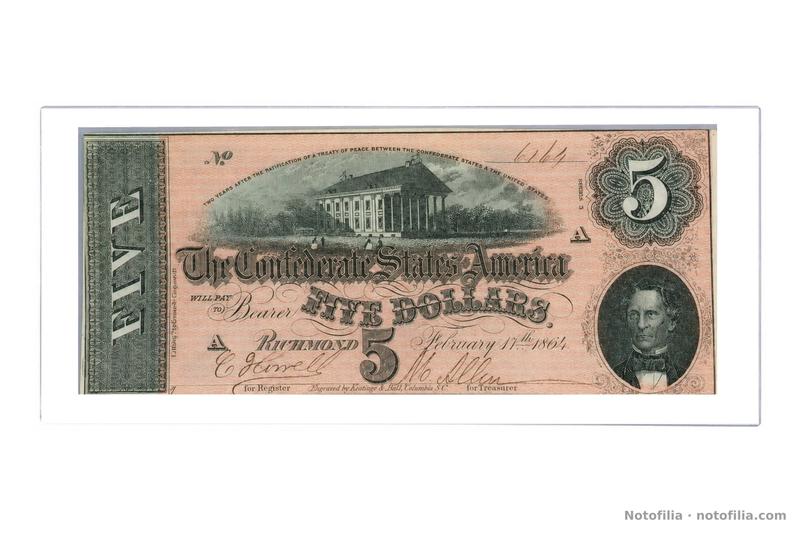
$5 · Confederate States · 1864
Pick P#67 · T-69 · N#226718 · Serial 6164 · 3 · A
Open the note page → -
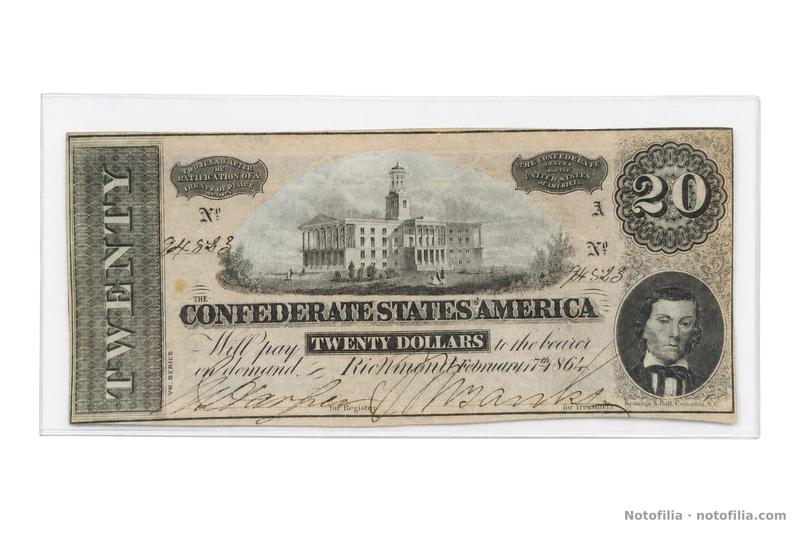
$20 · Confederate States · 1864
Pick P#69 · T-67 · N#202478 · Serial 74523 · A
Open the note page → -
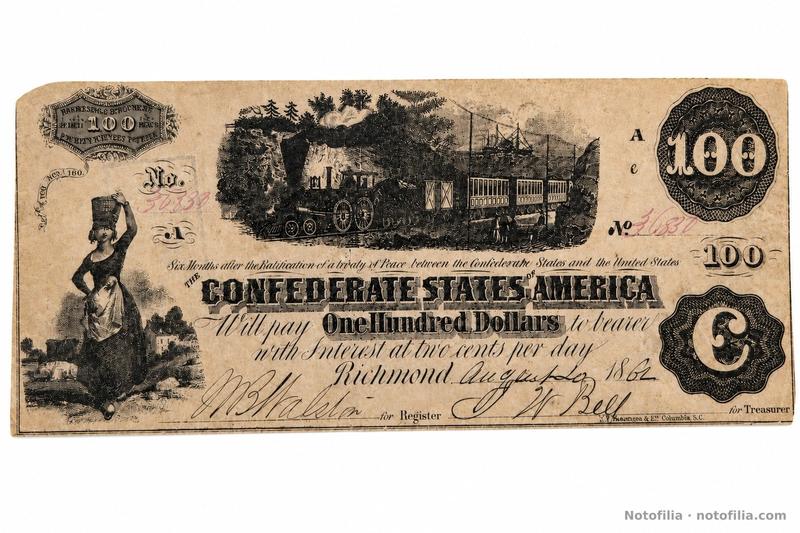
$100 · Confederate States · 1862
Pick P#44 · T-40 · N#208004 · Serial 36830 · Ac
Open the note page →
1861–1862
Demand Notes
The first federal paper of general circulation: payable on demand, with the green back that coined “greenback.”
To finance the opening of the Civil War, Congress authorized non-interest-bearing Treasury Demand Notes: $5, $10, and $20, payable on demand in coin at designated offices. The U.S. Currency Education Program and the BEP agree: this was the first general circulation of federal paper. Green ink on the back coined the nickname “greenback.” Private banknote companies engraved the first plates; clerks in the Treasury building signed, separated, and trimmed the sheets. The BEP grew from that work. United States Notes of 1862 replaced them as legal tender; the nickname traveled with them. Federal paper issued since 1861 remains redeemable at face. This case does not yet hold a Demand Note with a photograph and serial.
1862–1971
United States Notes
Legal Tender Notes, or greenbacks: the legal-tender federal paper that replaced Demand Notes, with a red seal.
The act of 25 February 1862 authorized United States Notes — also Legal Tender Notes or greenbacks — as legal tender for public and private debts. The U.S. Currency Education Program places them after Demand Notes, which they replaced; the nickname “greenback” came from those green backs. At first private banknote companies engraved them and the Treasury only sealed and cut. The BEP began engraving faces and seals with Series 1869. A red seal and red serials mark the type. The last BEP delivery to the Treasury was in 1971; none have been placed in circulation since 21 January 1971. Outstanding notes remain redeemable at face value. This case will gather the 1928 red-seal $1 and the 1966 $100, both small-size.
1862–1876
Fractional Currency
Paper from 3¢ to 50¢ for everyday change when coin vanished from circulation.
During the Civil War, hoarding of silver and gold left everyday trade without change. The Treasury answered with fractional paper: first Postage Currency, in 1862, then five issues of Fractional Currency through 1876. The BEP dates to 1863 the first currency produced entirely at the Treasury, in 5¢, 10¢, 25¢, and 50¢; later issues added 3¢ and 15¢. This is not Baraboo commemorative scrip, nor the fractionals of Military Payment Certificates. Friedberg gives the class its own section. This case does not yet hold a photographed example; when one is documented it will have its own note page. A Pick number or a year does not identify the object: the serial does, when one was printed.
1863–1935
National Bank Notes
Federal paper of chartered banks: town name, charter number, and local signatures, secured by Treasury bonds.
The National Banking Act of 1863 — and that of 1864 — authorized federally chartered banks to issue National Bank Notes secured by United States bonds deposited with the Treasury. The U.S. Currency Education Program and the American Numismatic Society place the unification of national paper there. For more than seventy years, until 1935, thousands of hometown banks put notes into circulation with the town name, the charter number, and the officers’ signatures. Friedberg groups them by First, Second, and Third Charter Period and, from 1929, by the small-size type. They are not obsolete notes: the 10 percent tax and this act ended state-bank paper. This collection does not yet hold a documented National Bank Note. A shared type or year does not identify the object: the charter and the serial do.
1865–1934
Gold Certificates
Paper backed by Treasury gold, from the BEP’s first issues to the 1933–1934 withdrawal.
The BEP dates the first Gold Certificates to 1865, with Fractional Currency — the latter in its own chapter — as one of the first issues produced entirely by the bureau. They represented gold held by the Treasury. The public lost the right to redeem them in 1933, when the United States left the gold standard; Series 1928 was the last small-size type in general circulation. The Series 1934 $100,000 certificate — the highest denomination the BEP ever printed, from 18 December 1934 through 9 January 1935 — moved only between Federal Reserve Banks, never among the public. This collection will document the 1928 $10 Gold Certificate.
1878–1964
Silver Certificates
Certificates payable in Treasury silver, the North Africa yellow seal, and HAWAII overprints.
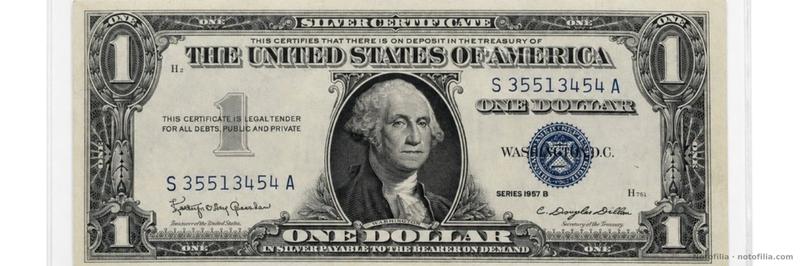
In 1878 the Treasury issued Silver Certificates, authorized by legislation that increased the purchase and coinage of silver. The BEP and uscurrency.gov agree on that date. In 1896 that class carried the Educational Series: the $1 with History Instructing Youth and the $2 with Science presenting Steam and Electricity to Commerce and Manufacture. Those notes are not Treasury Notes. In 1935 both faces of the Great Seal of the United States appeared together for the first time on the $1 of this class. During the Second World War the BEP printed silver certificates and Federal Reserve notes with a HAWAII overprint, brown seals, and brown serials, so they could be declared worthless if the islands fell. The 1935-A $1 with a yellow seal — the North Africa issue — served the same purpose with Allied troops. Redemption in silver ended in 1968. This case opens with the Series 1957-B $1 Silver Certificate, serial S35513454A, and will add that North Africa yellow-seal $1.
1890–1891
Treasury Notes (Coin Notes)
Paper of the Sherman Silver Purchase Act: redeemable in coin, Series 1890 and 1891.
In 1890 the Treasury began issuing Treasury Notes, also called Coin Notes, authorized by the Sherman Silver Purchase Act: the bearer redeemed them in coin — gold or silver, at the Treasury’s choice. The series are 1890 and 1891. The ornate 1890 back includes the $100 whose zeros collectors call the Watermelon Note; Series 1891 opened the reverse. The 1896 Educational Series — History Instructing Youth on the $1 — is a Silver Certificate issue, not this class. Friedberg gives them the Treasury or Coin Notes chapter. This case does not yet hold an example with a photograph and serial.
1928–1929
Large size and small size
The 1929 reduction: from eight to twelve notes per sheet, and the format still in circulation.
The BEP and the U.S. Currency Education Program place in 1929 the widest change in the look of United States paper. To lower manufacturing cost, the format went from about 7.375 × 3.125 inches to 6.14 × 2.61 — roughly 30 percent smaller — and from eight to twelve notes per sheet. The printed series is 1928; release to the public, 1929. Each denomination unified portrait and back across classes; the seal and its color mark the type. That line — large size versus small size — is how collectors divide federal paper. Small-size National Bank Notes are 1929; the Series 1934 Federal Reserve Notes in this case are already the modern format.
from 1914
Federal Reserve
The 1913 Act, Federal Reserve Notes, and emergency Federal Reserve Bank Notes.
The Federal Reserve Act of 1913 created the central bank and authorized two kinds of paper: Federal Reserve Notes, issued by the Board, and Federal Reserve Bank Notes, emergency currency of each district bank in the early twentieth century. The BEP draws that distinction clearly. From 1914 FRNs have been the circulating paper; today they are the only type still issued. The first issues are large-size; Series 1928, released in 1929, opens the small format that the 1934 note pages in this case document. In 1934 the BEP added the HAWAII overprint to FRNs and silver certificates. The Series 1934 Chicago (G / 7) $10, serial G30986728A, the Series 1934A $10 of the same district, serial G74025286A, the Series 1934A Cleveland (D / 4) $10, serial D78652996A, the Series 1934D Richmond (E / 5) $10, serial E60822246B, the Series 1934A New York (B / 2) $500, serial B00286799A, PMG 55, the Series 1934A $1,000 of the same district, serial B00411221A, the Series 2003 Atlanta (F / 6) $1 star replacement F05033622★, and the Series 2003 St. Louis (H / 8) $2 star replacement H00010418★, PMG 64 EPQ, already have note pages. Still to come are the 1929 Minneapolis $100 FRBN, further 1934 $10 notes from other districts, the 1934 Hawaii $20, and the 1990 Cleveland $100. Vietnam Military Payment Certificates are documented in their own case. USDA food coupons will be documented alongside these federal series.
-
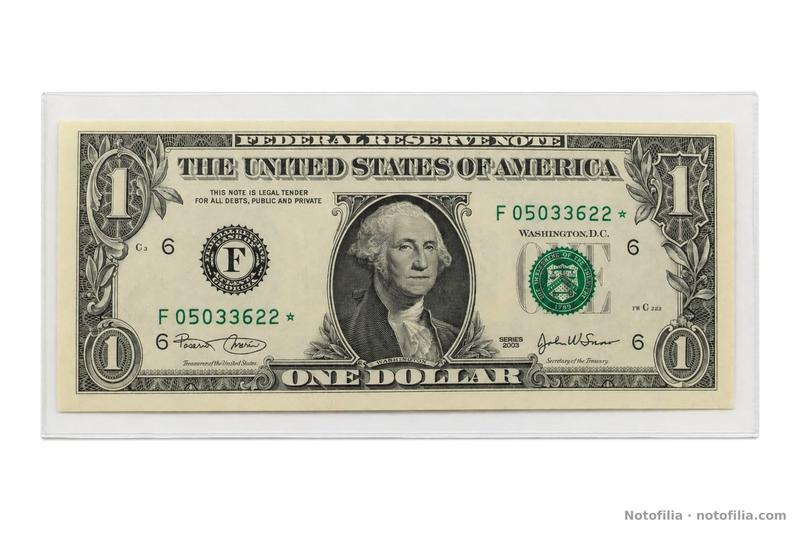
$1 · Series 2003 · Atlanta ★
Pick P#515a · Fr. 1929-F* · Serial F05033622★
Open the note page → -
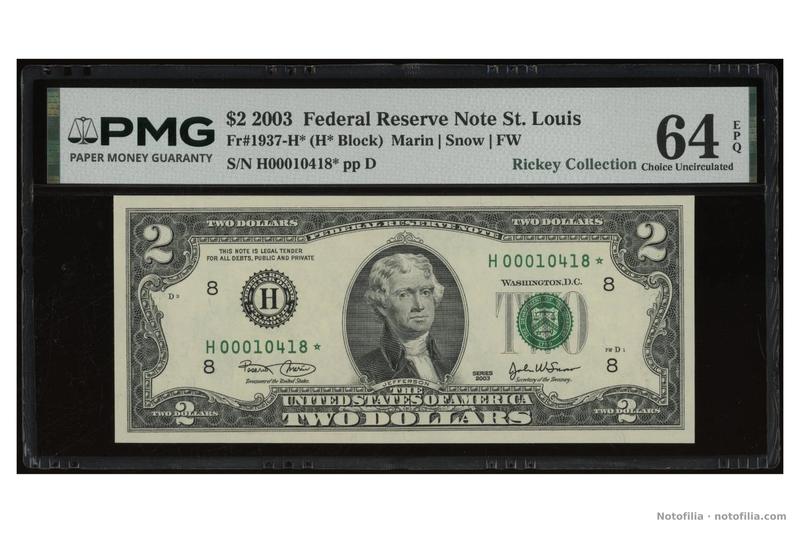
$2 · Series 2003 · St. Louis ★
Pick P#516 · Fr. 1937-H* · Serial H00010418★
Open the note page → -
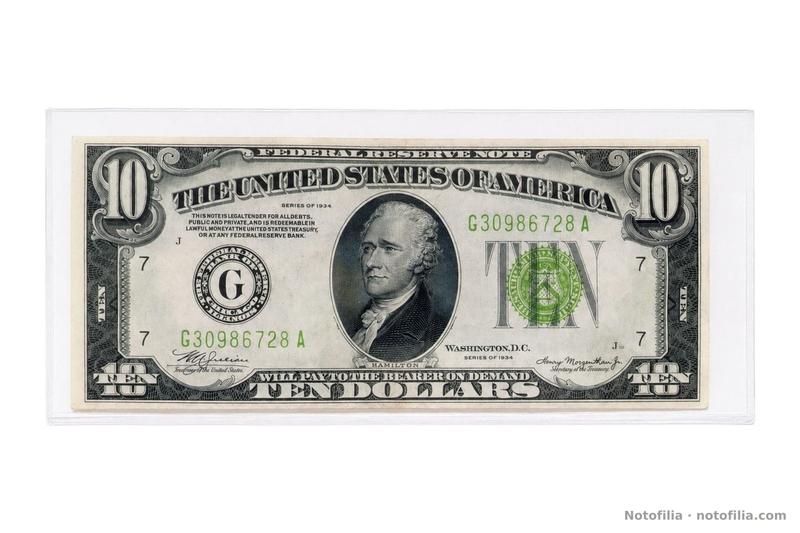
$10 · Series 1934 · Chicago
Pick P#430 · Fr. 2004-G · Serial G30986728A
Open the note page → -
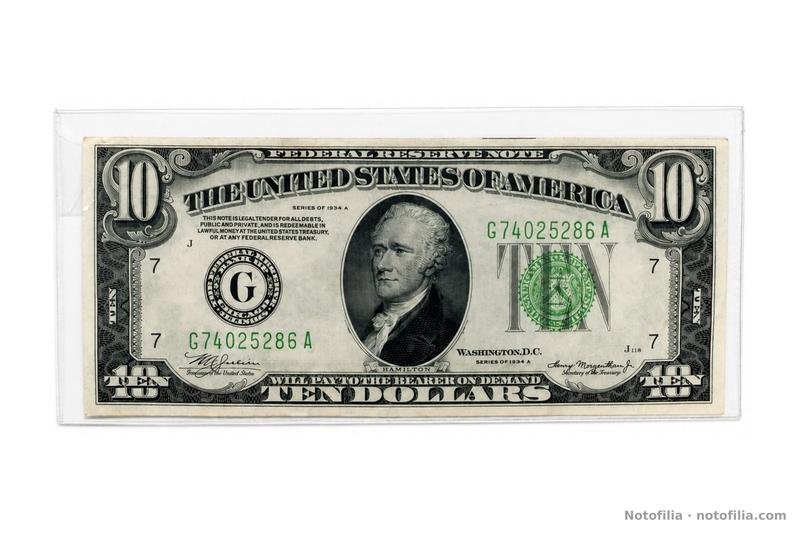
$10 · Series 1934A · Chicago
Pick P#430Da · Fr. 2006-G · Serial G74025286A
Open the note page → -
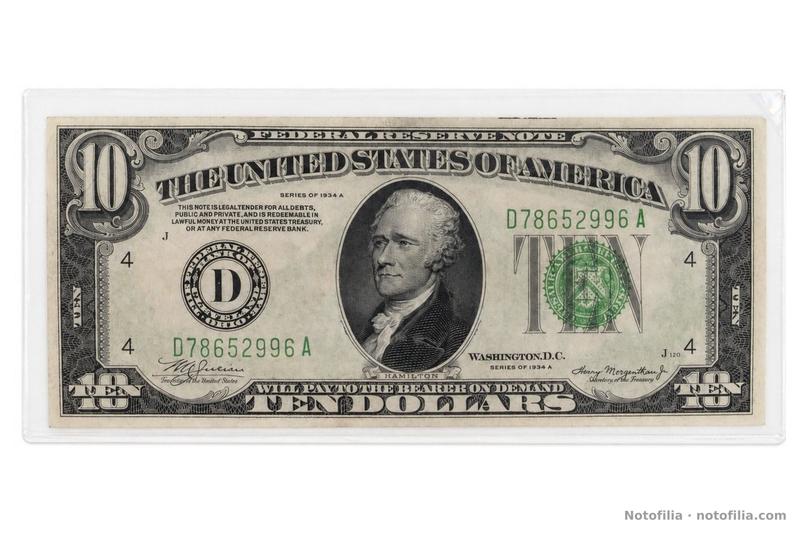
$10 · Series 1934A · Cleveland
Pick P#430Da · Fr. 2006-D · Serial D78652996A
Open the note page → -
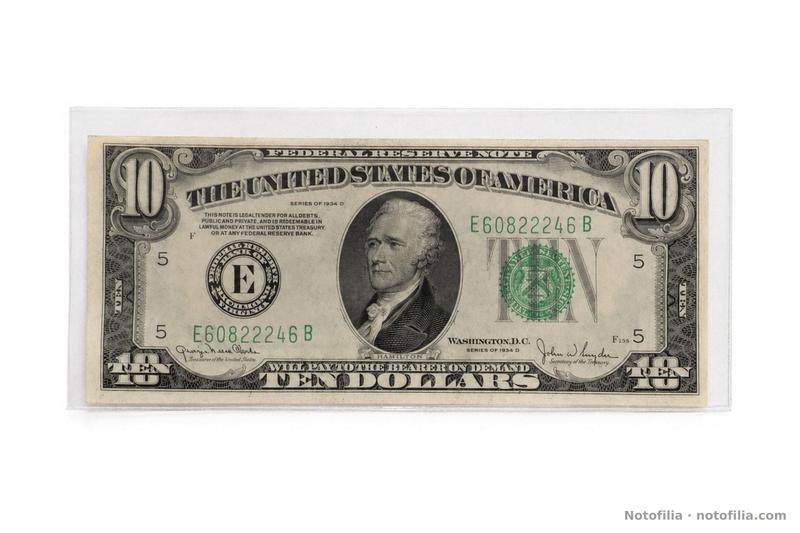
$10 · Series 1934D · Richmond
Pick P#430Dd · Fr. 2009-E · Serial E60822246B
Open the note page → -
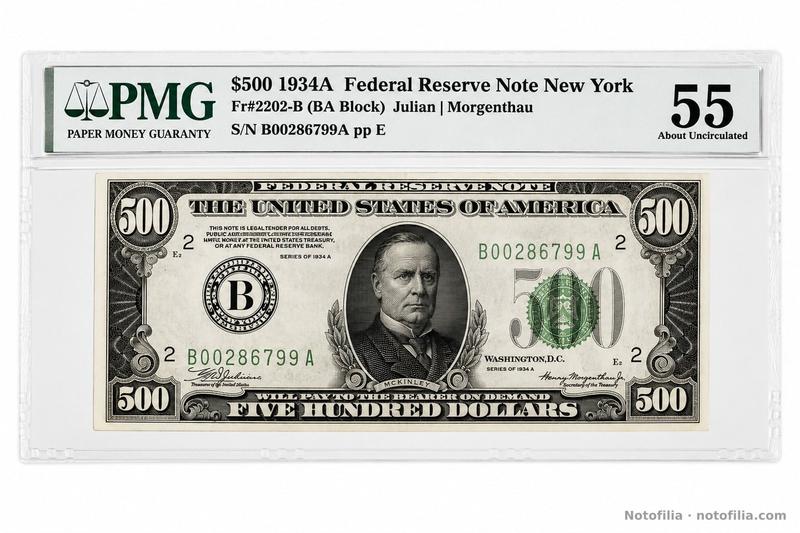
$500 · Series 1934A · New York
Pick P#434a · Fr. 2202-B · Serial B00286799A
Open the note page → -
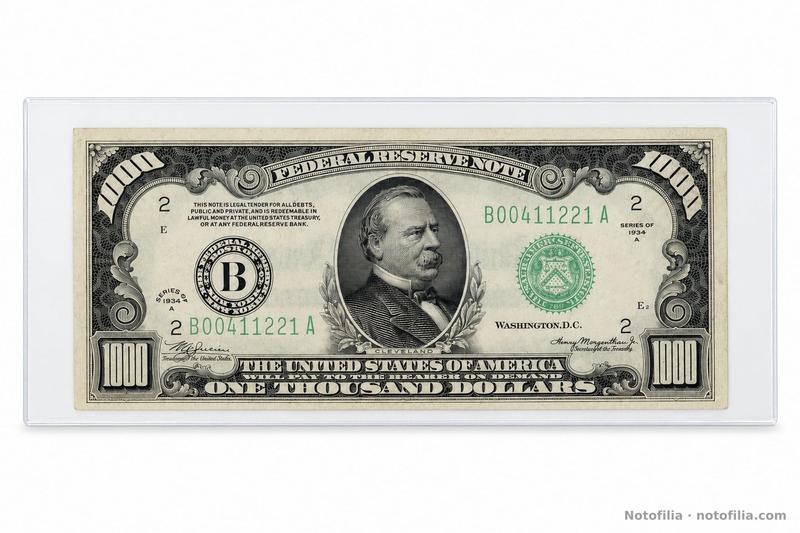
$1,000 · Series 1934A · New York
Pick P#435a · Fr. 2212-B · Serial B00411221A
Open the note page →
from 2020
Pop art
Contemporary interventions on genuine United States notes, not official BEP redesigns.
On legal-tender paper — chiefly the Federal Reserve $1 and $2 — contemporary artists print, stamp, or draw until the note becomes a pop-art object. These are not Treasury or BEP issues. In this collection that intervention is chiefly Rency (manuscript signature RENCY). Pelé / The Beautiful Game, edition 5/200; Messi / You Have to Fight to Reach Your Dream, edition 2/222; Life Is Beautiful / LIFE SPRAY, also 5/200; Warhol & Basquiat / Life Is Beautiful; and Trump / Never Surrender already have note pages. Pelé, Messi, LIFE SPRAY, and Warhol–Basquiat show printed serial F71235101A and are distinct objects; on Never Surrender the paper serial is not readable under the overlay.
-
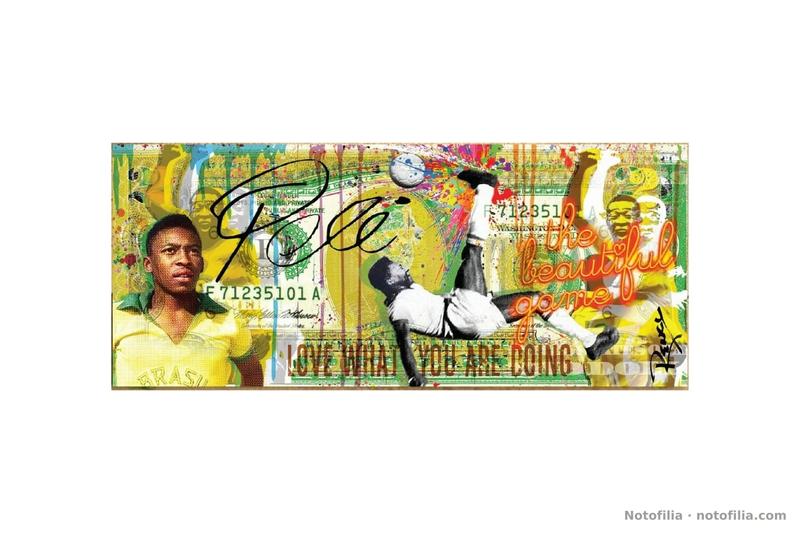
Pelé / The Beautiful Game · 5/200
Pick Rency · 5/200 · Serial F71235101A
Open the note page → -

Messi / You Have to Fight to Reach Your Dream · 2/222
Pick Rency · 2/222 · Serial F71235101A
Open the note page → -

Warhol & Basquiat / Life Is Beautiful
Pick Rency · Serial F71235101A
Open the note page → -
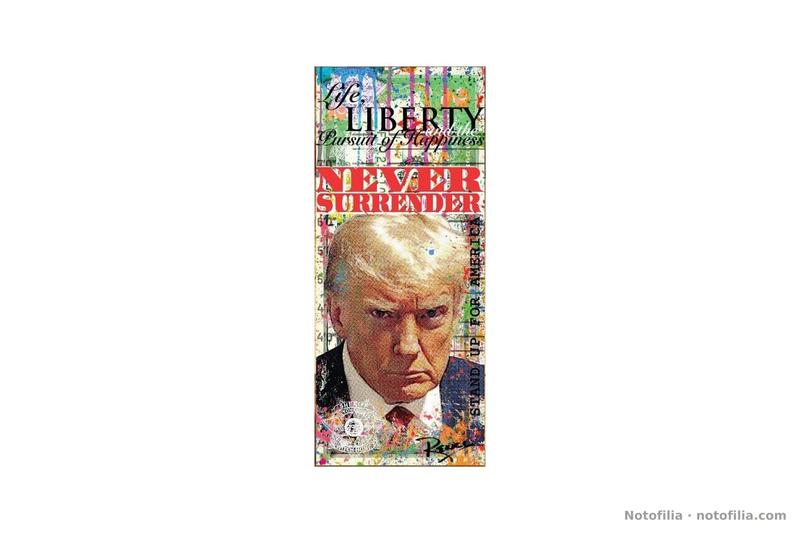
Trump / Never Surrender
Pick Rency · Serial —
Open the note page → -
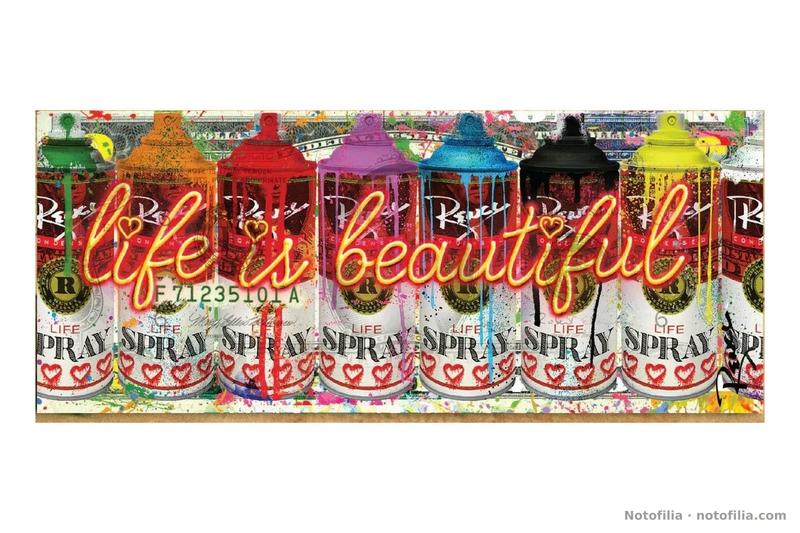
Life Is Beautiful / LIFE SPRAY · 5/200
Pick Rency · 5/200 · Serial F71235101A
Open the note page →
20th–21st c.
Miscellaneous
Marked circulating paper, test notes, commemorative scrip, and other pieces that sit outside the federal series and pop art.
Outside “clean” legal-tender paper and the contemporary interventions on the $1, this case holds pieces that do not form a series of their own: a Federal Reserve Note stamped for Where’s George? (opens in a new tab) , BEP Giori test notes, commemorative scrip, and promotional issues. The Series 2006 Dallas $1, serial K46602688C — still legal tender, but documented by the red stamps as a circulation-tracking object, not as a type FRN — the uniface Giori Lincoln Memorial test note, ca. 1970s, with no serial, the 1933 Baraboo 5¢ scrip, John Ringling, serial A4895, the 10¢ of the same scrip, Chas. Ringling, serial A2844, the 15¢, Al. T. Ringling, serial A2819, and the $1, Ringling Bros., serial A2002, already have note pages. The Golden Jubilee scrip — Chamber of Commerce, Shafer WI100, 5¢ to $1 — has a type page; the 25¢ and 50¢ still wait for each note’s serial or certificate. Further note pages will be published here as they are photographed.
-
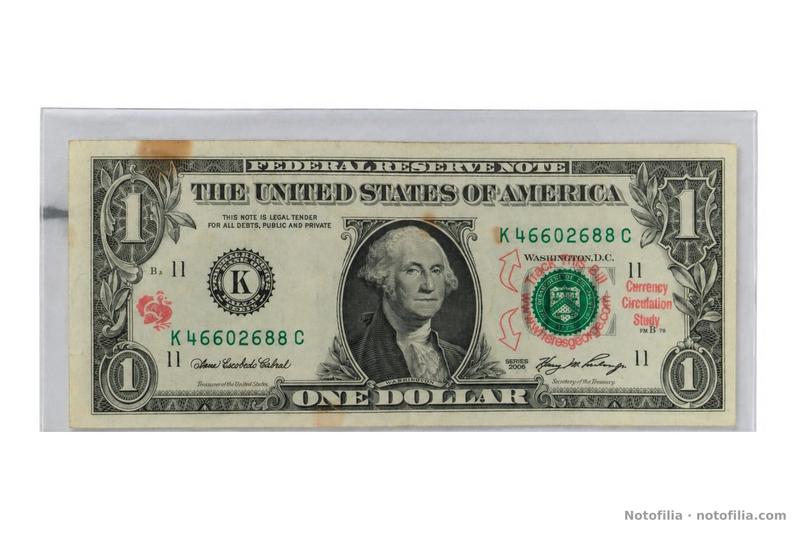
$1 · Series 2006 · Dallas · Where’s George?
Pick P#523a · Fr. 1933-K · Serial K46602688C
Open the note page → -
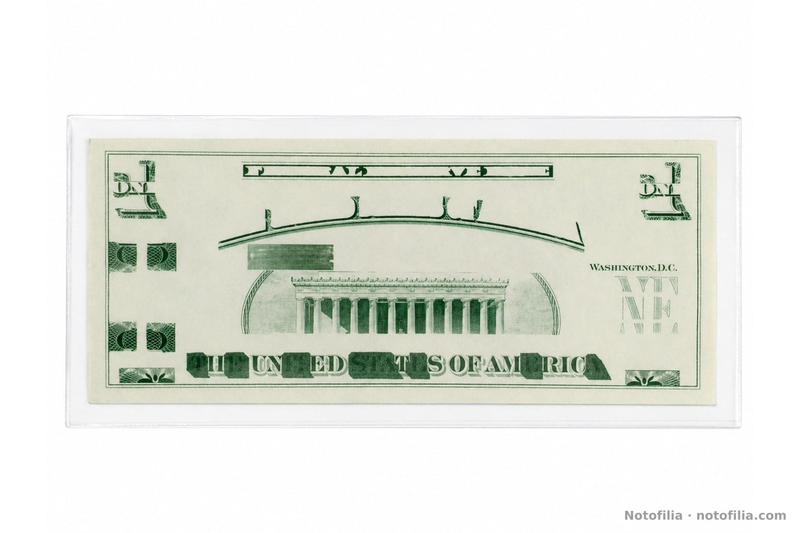
Giori test note · Lincoln Memorial · ca. 1970s
Pick Giori · Lincoln Memorial (uniface) · Serial —
Open the note page → -
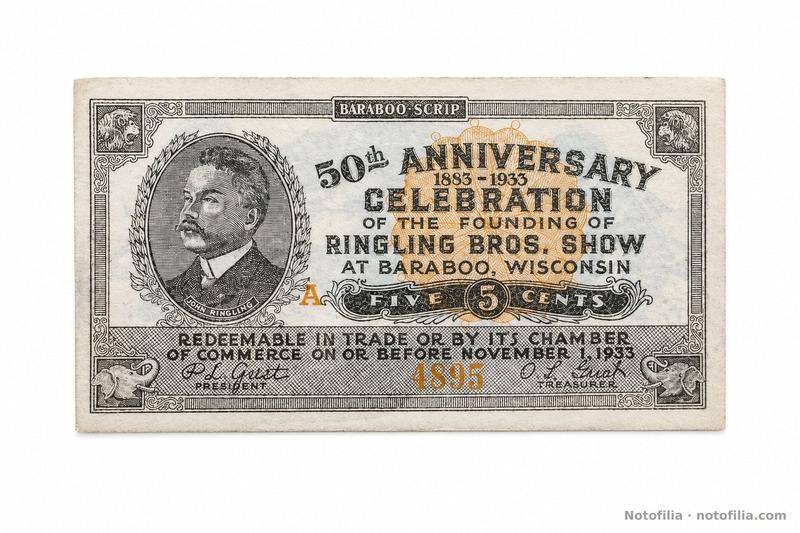
5¢ · Baraboo Scrip · John Ringling · 1933
Pick Shafer WI100 · 5¢ · Serial A4895
Open the note page → -
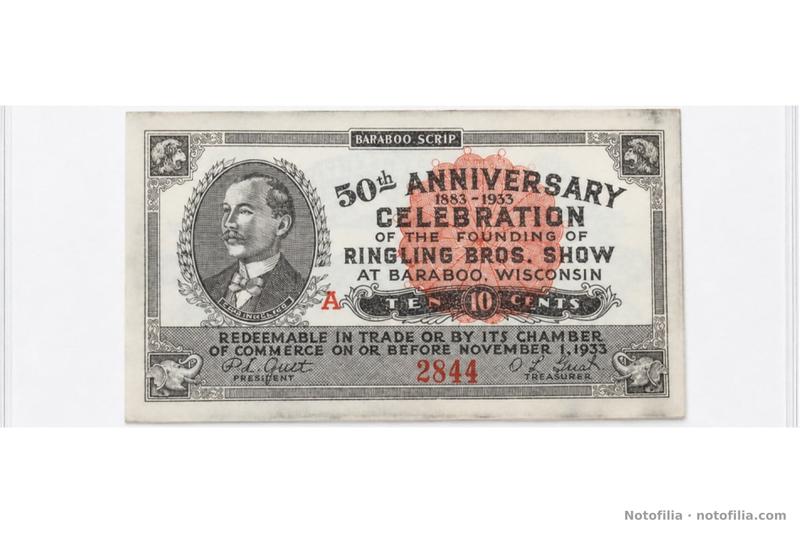
10¢ · Baraboo Scrip · Chas. Ringling · 1933
Pick Shafer WI100 · 10¢ · Serial A2844
Open the note page → -
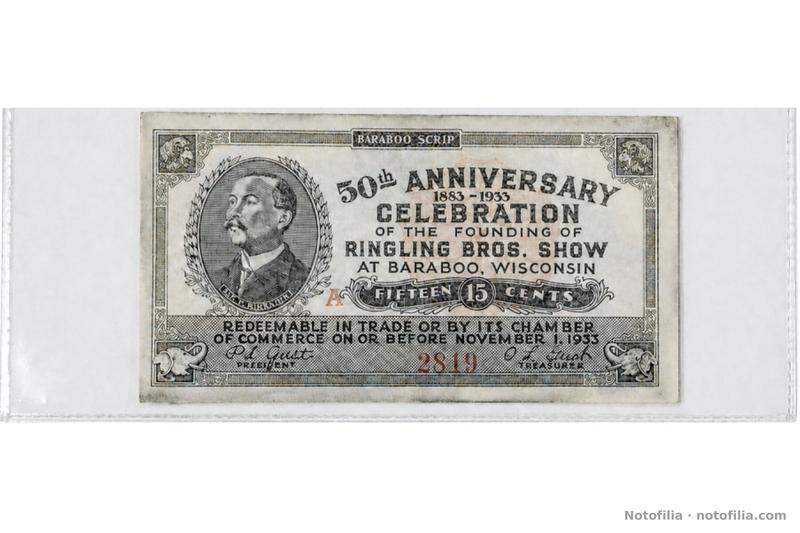
15¢ · Baraboo Scrip · Al. T. Ringling · 1933
Pick Shafer WI100 · 15¢ · Serial A2819
Open the note page → -
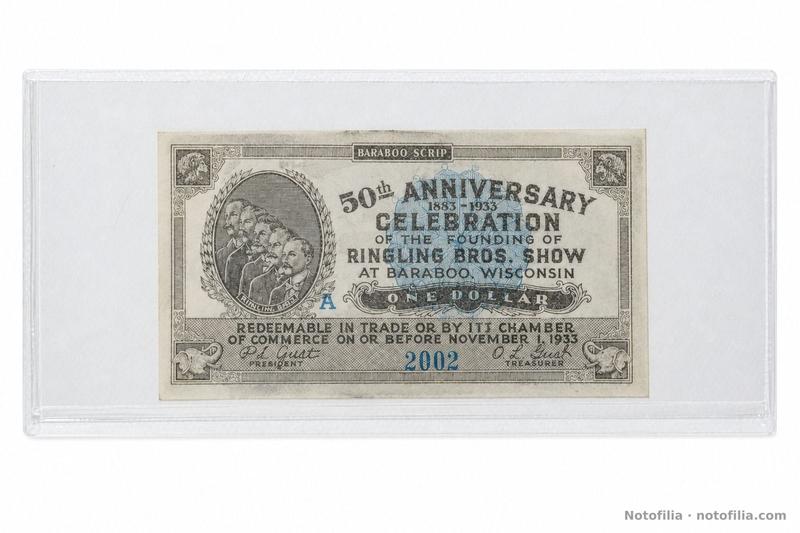
$1 · Baraboo Scrip · Ringling Bros. · 1933
Pick Shafer WI100 · $1 · Serial A2002
Open the note page →
Frequently asked questions
What United States paper money is in Notofilia?
The case brings together colonial issues, obsolete notes, Confederates, Demand Notes, United States Notes, Fractional Currency, National Bank Notes, Treasury Notes, gold and silver certificates, the 1928–1929 size change, Federal Reserve notes, military payment certificates, pop art, and miscellaneous issues. Several of those classes still have no note page: a serial is not invented. It is not a complete Friedberg catalog: it is the inventory of the examples documented here.
What was the first federal paper of general circulation?
The Demand Notes of 1861 ($5, $10, and $20), payable on demand in coin. The U.S. Currency Education Program and the BEP place them as the Treasury’s first general circulation and the origin of the nickname “greenback.” United States Notes of 1862 replaced them as legal tender. This collection does not yet hold a Demand Note with a photograph and serial.
What are National Bank Notes, Fractional Currency, and Coin Notes?
Three federal classes this case narrates and does not yet record as holdings. National Bank Notes (1863–1935) were issued by chartered banks, secured by Treasury bonds, with the town name and charter number. Fractional Currency (1862–1876) was 3¢-to-50¢ paper when coin disappeared. Treasury or Coin Notes (1890–1891) come from the Sherman Silver Purchase Act; the 1896 Educational Series is a Silver Certificate issue, not that class.
When did United States paper change to small size?
In 1929. The BEP cut the format by about 30 percent — from about 7.375 × 3.125 inches to 6.14 × 2.61 — and went from eight notes per sheet to twelve. The printed series is 1928. That line divides large size from small size; the Series 1934 Federal Reserve Notes in this case are already the modern format.
What are Vietnam MPCs?
Military Payment Certificates were the paper used on United States bases abroad. This collection documents series used in Vietnam (641, 661, 681, and 692) with their own pages when a photo and serial exist.
Are the United States notes in this collection for sale?
No. The catalog cites Friedberg, Haxby, Schwan, Criswell, or Pick when those numbers exist, and states that nothing is for sale. Remaining note pages are published as pieces are photographed.
Are there United States coins in Notofilia?
Yes. The numismatics case records the Philadelphia Semiquincentennial 1776–2026 $1, with Trump’s portrait, manganese brass — not gold — and unslabbed. This country’s paper remains in the notaphily case, including Rency’s Trump / Never Surrender pop collage, a different object.
Sources
-
U.S. Currency Education Program — History of U.S. Currency
(opens in a new tab)
Massachusetts 1690, 1861 Demand Notes (greenbacks), National Bank Notes, 1890 Treasury Notes, the 1896 Educational Series, and the 1929 size reduction.
-
Bureau of Engraving and Printing — History
(opens in a new tab)
1861 Demand Notes; 1863 Fractional Currency; Gold Certificates (1865); the 1929 reduction (eight to twelve notes per sheet, about 30 percent smaller).
-
Bureau of Engraving and Printing — Currency Notes
(opens in a new tab)
Demand Notes as IOUs payable on demand; origin of “greenback”; Fractional Currency and the Treasury seal.
-
Bureau of Engraving and Printing — FAQs
(opens in a new tab)
United States Notes: first national paper (1862); last placed in circulation 21 January 1971. Series 1934 $100,000 Gold Certificate.
-
American Numismatic Society — A History of American Currency
(opens in a new tab)
Massachusetts 1690 as the first Western public paper; the 10 percent tax and the National Banking Act of 1863.
-
Arthur L. and Ira S. Friedberg — Paper Money of the United States (Coin & Currency Institute)
(opens in a new tab)
Chapters on Demand Notes, Legal Tender, Fractional Currency, Treasury or Coin Notes, and National Bank Notes. Friedberg numbers are cited; price columns are not republished.
-
Paper Money Guaranty — Population Report
(opens in a new tab)
Census of encapsulated notes (National Bank Notes, Fractional Currency, and the other classes). This case does not republish population figures.
-
Newman Numismatic Portal — Massachusetts, 10 December 1690
(opens in a new tab)
£7,000 in Colony or Old Charter Bills; first authorized public paper currency in the Western world.
- Bank Note Museum — United States (opens in a new tab)
-
Bank Note Museum — Confederate States of America
(opens in a new tab)
February 1864 issue: Pick 64–73, including the $20 P-69.