Published
Ranking the Best Coin and Banknote Grading Companies
Why grade, how to read the 1-to-70 Sheldon Scale, and which houses —PMG, NGC, PCGS, ANACS, ICG, and Legacy— lead the market.
- Reviewed by
- Yezid Acosta
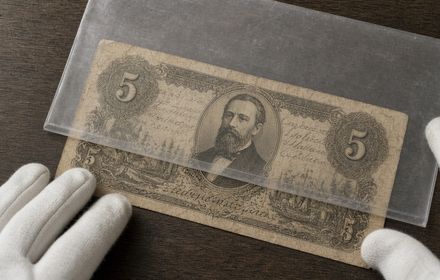
Welcome, fellow collectors, to another deep dive into the fascinating world of numismatics and notaphily. Here at Notofilia we understand that every banknote and every coin has a story to tell. Whether it is the crisp rustle of an uncirculated nineteenth-century note or the heavy metallic clink of a silver piece of eight, our collections are physical pieces of history.
But as we curate these historical treasures we face a modern challenge: how do we objectively prove their authenticity, preserve their condition, and maximize their market value? The answer lies in third-party grading.
In this guide we explore the universe of coin and banknote grading. We break down why grading matters, explain the famous 1-to-70 scale, and rank the most recognized grading companies in the world today. The aim is to be clear and accessible in both English and Spanish, so you have the knowledge needed to protect and elevate your collection.
Let us look at the guardians of our numismatic history.
Part 1: Why grade your collection?
Before we rank the companies, we must understand the “why.” Thirty years ago, buying a coin or a banknote was a wild frontier. A seller might tell you a coin was in “Mint State” (Uncirculated), but their definition of Mint State might be very different from yours. That led to disagreements, overpricing, and, sadly, the selling of counterfeits. For a collector’s first line of visual defense, see also our guide on how to identify counterfeit banknotes.
Third-party grading revolutionized the hobby by introducing an unbiased, objective referee. When you send your item to a top-tier grading company, you are paying for four essential services.
1. Guaranteed authenticity
In an era where high-quality counterfeits are becoming increasingly sophisticated, a certified holder is your first line of defense. The top grading companies employ world-class experts who use magnification, weight analysis, and metallurgical testing to guarantee that your piece is genuine. For collectors, that provides real peace of mind.
2. Objective condition assessment
The difference between a grade of 64 and a grade of 65 might seem microscopic to the naked eye, but in the marketplace it can mean hundreds or even thousands of dollars. Professional graders evaluate items in highly controlled lighting. They look for surface wear, original luster, edge damage, and, in the case of paper money, folds, pinholes, and paper quality.
3. Preservation and protection
Once graded, your coin or banknote is sealed in a tamper-evident, sonically sealed plastic holder (often called a “slab”). These holders are made from inert plastics that will not damage the item over time. They protect historical artifacts from humidity, oils from human fingers, and environmental damage. For everyday storage before or instead of a slab, archival polyester remains essential: see Mylar yes, plastic no.
4. Maximum market liquidity
When it comes time to sell or pass a collection to heirs, graded items are much easier to liquidate. Buyers from across the globe will confidently purchase a certified item sight-unseen because they trust the grade on the label. That trust creates a highly liquid global marketplace.
Part 2: Understanding the language of grading (the Sheldon Scale)
To speak the language of grading companies, we must understand the scale they use. Almost all respected numismatic grading companies use the Sheldon Scale, originally developed in 1949 by Dr. William Sheldon. It is a 70-point scale.
While initially designed for large copper cents, it has been adopted as the universal standard for coins and, with paper-specific notes, for banknotes. A simplified translation of the scale:
- 1 — Poor (PO): Barely identifiable.
- 2 — Fair (FR): Heavily worn, but the type of coin or note is clear.
- 3 to 4 — About Good (AG): Very heavily worn; legends and dates may be fading.
- 8 to 10 — Very Good (VG): Major details are visible but flat. Folds on banknotes are heavy and numerous.
- 12 to 15 — Fine (F): Moderate to heavy wear. A banknote may have many folds and minor edge tears but is still a solid note.
- 20 to 35 — Very Fine (VF): Light to moderate wear. A VF banknote might have a few strong folds but still retains some crispness.
- 40 to 45 — Extremely Fine (XF or EF): Very light wear. An XF banknote typically has only three light folds or one strong crease.
- 50 to 58 — About Uncirculated (AU): Barely any trace of wear. An AU note might have just one light fold or corner bend.
- 60 to 70 — Mint State (MS) / Uncirculated (UNC): No wear whatsoever. A 60 might have bag marks (for coins) or minor handling smudges (for notes), while a 70 is absolute, flawless perfection under a microscope.
Special designations for banknotes
When dealing with paper money (notaphily), you will often see special acronyms appended to the high grades:
- EPQ (Exceptional Paper Quality) or PPQ (Premium Paper Quality): the banknote has not been chemically washed, pressed, or altered. It retains its original embossing and crispness. For serious banknote collectors, this designation is critical.
Part 3: Ranking the best grading companies in the world
Now that we know why we grade and the scale we use, let us look at the companies that provide these services. We have ranked them on market reputation, accuracy, resale value, and international recognition.
When you want top dollar for your collection, these are the names you must know.
Rank #1 (tie): The Certified Collectibles Group (NGC & PMG)
It is impossible to separate the top two titans of the industry, but for notaphily (paper money) PMG takes the crown, while its sister company NGC is a titan in coins.
PMG (Paper Money Guaranty)
- Specialty: Banknotes (notaphily)
- Reputation: Absolute market leader
Founded in 2005, PMG is the undisputed leader of paper-money grading. If you have a rare piece of currency — a nineteenth-century United States fractional note, a vibrant Spanish Civil War local issue, or a rare Asian dynasty note — PMG is the gold standard.
Why they rank at the top: PMG’s holder is universally respected. They use the EPQ designation, which commands large premiums at houses such as Heritage Auctions and Stack’s Bowers. PMG’s registry set — an online platform where collectors compete to build the best sets — drives demand. They also have an extensive global presence, with offices in Munich, London, Hong Kong, and Shanghai, making them the most internationally recognized brand for paper money.
The holder: a slightly flexible, crystal-clear sleeve that is sonically sealed. It features a top label with a hologram and a barcode for database verification.
NGC (Numismatic Guaranty Company)
- Specialty: World and U.S. coins, ancient coins
- Reputation: Absolute market leader
PMG’s sister company, NGC, was founded in 1987. They have graded tens of millions of coins, making them the largest third-party grading service in the world by volume.
Why they rank at the top: NGC is renowned for consistency, especially in world and ancient coins (via NGC Ancients). Their experts are highly regarded for attributing rare varieties. The “Star” designation (★) given to coins with exceptional eye appeal is highly sought after.
The holder: sturdy, scratch-resistant plastic with a distinct white (or sometimes special-edition) inner core. Their EdgeView holder allows collectors to see the edge of the coin, which is vital for coins with edge lettering.
Rank #1 (tie): Professional Coin Grading Service (PCGS & PCGS Banknote)
PCGS is the co-ruler of the grading world. In United States coins, PCGS often commands a slight market premium over NGC. In paper money, they are the main challenger to PMG.
PCGS (Professional Coin Grading Service)
- Specialty: United States and world coins
- Reputation: Absolute market leader (slight premium for U.S. coins)
Founded in 1986 by a group of legendary dealers including David Hall, PCGS essentially invented the modern grading concept. They were the first to encapsulate coins in tamper-evident holders.
Why they rank at the top: Historically, a PCGS-graded United States coin will often sell for a slightly higher price than an identically graded coin from another company. The market perceives PCGS as slightly more conservative (stricter) in their grading, though this is a subject of endless debate. Their Set Registry is wildly popular and highly competitive.
The holder: a clear plastic outer shell with a clear inner ring. Many collectors prefer the aesthetic because it makes the coin appear to float. Modern slabs also incorporate NFC (near-field communication): you can tap a smartphone to the slab to verify it on the PCGS database.
PCGS Banknote
- Specialty: Banknotes (notaphily)
- Reputation: Top-tier challenger
PCGS has had a complicated history with paper money. They originally graded notes under the name PCGS Currency, but after a corporate split that brand became a separate entity (Legacy Currency Grading). PCGS later relaunched in-house paper-money grading as PCGS Banknote.
Why they rank at the top: Backed by the resources and reputation of PCGS, PCGS Banknote is quickly gaining ground. They use the PPQ (Premium Paper Quality) designation. While PMG still holds the dominant market share in paper money, PCGS Banknote provides an elite, highly respected alternative, particularly for collectors who want coins and banknotes matching in PCGS-branded holders.
Rank #3: ANACS (American Numismatic Association Certification Service)
The historic pioneer of grading — an excellent choice for budget-conscious collectors and variety hunters.
- Specialty: U.S. coins, error coins, VAMs (varieties)
- Reputation: Highly respected second tier
Founded in 1972 by the American Numismatic Association, ANACS is the oldest coin grading service in the United States. Originally they only issued photo certificates and did not encapsulate coins. They were later sold and became a private entity.
Why they rank #3: ANACS is universally trusted for authenticity. While their coins do not usually sell for the massive premiums that PCGS or NGC coins command, collectors love them for two reasons. First, they are generally less expensive and have faster turnaround times. Second, they are the undisputed kings of attributing varieties and errors. If you have a coin with a repunched mintmark, a die crack, or a strange error, ANACS will attribute it on the label for a lower cost than the big two.
The holder: a distinctive curved-top holder with a yellow label. It is smaller and easier to store in bulk than the larger slabs, which many traditional collectors appreciate.
Rank #4: ICG (Independent Coin Graders)
A solid, budget-friendly option, particularly strong in ancient coins and modern issues.
- Specialty: World coins, modern commemoratives, ancients
- Reputation: Trusted second tier
ICG was founded in 1998 by a group of respected industry professionals. They set out to be an alternative to the “Big Two” by offering high-quality grading at a fraction of the cost.
Why they rank #4: ICG will not add the same resale value as NGC or PCGS. They are, however, legitimate and accurate regarding authenticity. If you have family heirlooms or mid-value coins that you want authenticated and protected, but you do not want to spend a top-tier fee per coin, ICG is a strong option. They are also known for good customer service.
The holder: a unique clear holographic security seal and an interlocking design that makes them very secure.
Rank #5: Legacy Currency Grading (LCG)
A specialized service for paper-money collectors, carrying on historical traditions.
- Specialty: Banknotes (notaphily)
- Reputation: Niche / historical importance
Legacy Currency Grading was born out of the original PCGS Currency team. When the licensing agreement with PCGS ended, that team rebranded as Legacy Currency Grading.
Why they rank #5: Legacy has knowledgeable graders who have been looking at paper money for decades. For hardcore U.S. currency collectors, an LCG holder is well respected. They lack the global marketing power and international registry sets of PMG or the revamped PCGS Banknote, so their market share has shrunk, but they remain a trusted entity for accurate authentication and grading of paper money.
Honorable mentions and “basement slabbers”
It is crucial to issue a warning. The five companies listed above are legitimate, respected third-party graders. The market is unfortunately flooded with what collectors call “basement slabbers.”
These are individuals or companies that create their own plastic holders, print a label with a highly inflated grade (for example, grading a clearly worn coin as MS-65), and sell them to unsuspecting beginners on online auction sites.
Companies such as SGS (Star Grading Service), NNC, or INB are generally ignored by serious collectors. A grade from these companies holds no market weight, and you should value the coin or banknote purely on your own visual inspection, assuming the plastic holder offers no added value. Stick to the top tiers — PMG, NGC, PCGS, ANACS, ICG, LCG — to protect your investment.
Part 4: The art of crossover and resubmission
As you become more advanced, you will discover the nuances of the grading game. Because grading involves human opinion, it is inherently subjective. A coin graded MS-64 by one company might be graded MS-65 by another on a different day.
This has given rise to the practice of “crossovers.”
If a collector owns an ANACS-graded coin in MS-65, they might feel that PCGS would also grade it MS-65. They can submit the coin in the ANACS holder to PCGS for crossover. If PCGS agrees with the grade, they will break the coin out and put it in a PCGS holder, instantly increasing its market value.
Paper-money collectors often hunt for older holders. A banknote graded a standard Uncirculated 64 twenty years ago might qualify for an EPQ designation under today’s standards. Smart collectors look for these older holders, resubmit them, and capture the increased value of the modern designation.
Part 5: How to choose the right company
With all this information, how does a collector sitting at home decide where to send prized possessions? A simple decision matrix:
Scenario A: You have a high-value, rare banknote.
- The choice: PMG or PCGS Banknote.
- The reason: for high-end paper money you need the EPQ/PPQ designation and global market reach. PMG is the safest bet for maximum auction realization; PCGS Banknote is equally trusted.
Scenario B: You have a high-value United States or world coin.
- The choice: PCGS or NGC.
- The reason: these two are the undisputed kings of the coin market. Buyers will pay top dollar without hesitation. Choose based on which holder you find aesthetically pleasing, or which Set Registry you prefer.
Scenario C: You have a coin with a strange error (double die, off-center strike).
- The choice: ANACS.
- The reason: ANACS specializes in varieties and errors. They will attribute the exact error on the label more affordably than the big two.
Scenario D: You inherited a collection of mid-value items (roughly $50–$100) and just want them protected and authenticated for your family.
- The choice: ANACS or ICG.
- The reason: the high grading fees of the top two would eat too much of the value. ANACS and ICG offer frequent bulk specials, so you can encapsulate family history affordably.
If you are still choosing a collecting path, start with how to start a banknote collection and the difference between numismatics and notaphily.
Part 6: The future of grading — AI and digital security
The landscape of grading is evolving rapidly. The subjectivity of human graders is slowly being augmented by technology.
In recent years the top companies have begun using advanced computer imaging to assist in grading. Algorithms can map the surface of a coin or the fibers of a banknote in milliseconds, detecting microscopic wear or chemical alterations that the human eye might miss.
The integration of technology into the holders themselves is just as important. PCGS’s NFC chips allow instant verification via smartphone. We are moving toward a future where every graded item can be linked to a durable digital certificate, so the physical item and its grading data stay connected. That will make counterfeit slabs much harder to pass.
Conclusion: trust, preserve, and enjoy
Collecting coins and banknotes is more than accumulating objects; it is about preserving the economic and artistic history of human civilization. A beautifully engraved nineteenth-century banknote tells the story of an era; a worn silver coin whispers of the pockets it has traveled through.
Third-party grading companies are modern custodians of that history. The debate over whether PCGS is stricter than NGC, or whether PMG is better than PCGS Banknote, will rage on in collector forums forever. The underlying truth remains: grading protects your investment and preserves history.
When you choose to grade a collection with a top-tier company, you are doing more than putting plastic around paper and metal. You are guaranteeing authenticity for future generations and locking a piece of history in time.
Evaluate your collection. Find the raw gems that deserve preservation. Choose the right company for your specific needs, and enjoy the satisfaction of holding a certified piece of history in your hands.
Happy collecting from all of us at Notofilia.
Sources and further reading
This guide was compiled from the public educational materials of the leading grading services and numismatic organizations. For further exploration:
- PMG (Paper Money Guaranty) (opens in a new tab) — official grading scales, population reports, and paper-money certification.
- PCGS (Professional Coin Grading Service) (opens in a new tab) — origins of encapsulated grading, the Sheldon Scale, and market data.
- NGC (Numismatic Guaranty Company) (opens in a new tab) — world-coin grading, the Star designation, and census reports.
- ANACS (opens in a new tab) — historical data on the founding of third-party grading and error attribution.
- ICG (Independent Coin Graders) (opens in a new tab) — services and holder information.
- American Numismatic Association (ANA) (opens in a new tab) — educational resources on numismatic history and grading standards.
- Photograde: A Photographic Grading Encyclopedia for United States Coins by James F. Ruddy — a foundational text for visual wear on the Sheldon scale.
- Standard Catalog of World Paper Money (Pick catalog) — the reference for identifying world banknotes, heavily used by grading companies for attribution.
Frequently asked questions
Why grade a banknote or a coin?
A top-tier service authenticates the piece, assigns a Sheldon 1-to-70 grade, and seals it in an inert holder. That creates a shared condition language and makes the example easier to sell, inherit, or insure.
What is the Sheldon 1-to-70 scale?
It is the scale used by PMG, PCGS, NGC, and the other respected houses: 1 is barely identifiable and 70 is perfection under a microscope. On paper, high grades often add EPQ or PPQ when the note has not been washed or pressed.
PMG, PCGS, or NGC: which should I choose?
For a rare high-value note, PMG or PCGS Banknote are the market standard; for coins, PCGS and NGC lead. ANACS and ICG make sense when mid-value pieces cannot justify top-tier fees, especially for varieties and errors.