Published
Numismatics vs Notaphily
Numismatics and notaphily are often confused. What each studies, how they relate, and why the distinction matters to collectors.
- Reviewed by
- Yezid Acosta
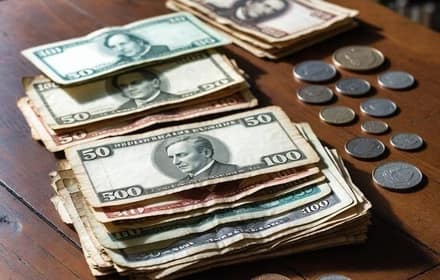
“Numismatics” and “notaphily” are often used as synonyms, but they name distinct disciplines within collecting. Understanding the difference helps orient a collection, choose the right catalogs, and conserve each piece as it deserves.
What numismatics is
Numismatics is the discipline that studies and collects coins, medals and, in its broadest sense, any object that has served as a means of payment through history. The term comes from Greek nómisma (“coin”). It goes far beyond accumulating pieces: it covers the historical, artistic, and technical analysis of each striking —the metals used, the mints, the assayers, the dies, and the economic context in which it circulated. A coin tells the story of the power that issued it, the trade that moved it, and the society that used it.
What notaphily is
Notaphily is the specialized branch focused on the study and collection of banknotes and paper money. Its name combines Latin nota (“note”) with Greek philía (“fondness”). The notaphilist cares about the history of each issue, its design and engraving, watermarks and security features, authorizing signatures, serial numbers, and the differences between public- and private-bank issues. Paper money, more fragile and ephemeral than metal, also poses its own identification and conservation challenges.
How they relate
The simplest view: notaphily is a branch of the larger tree of numismatics. Numismatics is the general umbrella —everything to do with money as an object of study— and notaphily is its specialization in paper money. That is why a banknote collector is, in a broad sense, also a numismatist, even if they prefer the more precise term.
Why the distinction matters
They share a spirit, but each discipline demands different knowledge and care:
- Different catalogs. Coins are usually referenced by KM# (Krause), while banknotes use the Pick number (P#).
- Different conservation. Metal and paper degrade in different ways: humidity, light, and handling affect a banknote far more severely than a coin.
- Its own grading. There are conservation scales specific to each substrate, and the same piece can be worth very different amounts according to grade.
Numismatics and notaphily at Notofilia
At Notofilia both disciplines live together: our virtual collection holds historical banknotes of Colombia, the United States, and other countries —the ground of notaphily— alongside colonial coins, proper to classical numismatics. To go deeper into the terminology, our glossary of numismatics and notaphily defines more than ninety essential terms for the collector.
Sources
- Real Academia Española, Diccionario de la lengua española (entries “numismática” and “notafilia”).
- Banco de la República of Colombia — numismatic collection and educational resources (banrepcultural.org).
- Standard Catalog of World Paper Money (Albert Pick) and Standard Catalog of World Coins (Krause Publications), reference works for cataloguing banknotes and coins.