Published
Source: Futura-Sciences (opens in a new tab)
A copper cauldron of 12th-century silver
The Stockholm County Board (18 September 2025) describes about six kilograms of 12th-century silver. Futura retells it on 27 November 2026.
- Reviewed by
- Yezid Acosta
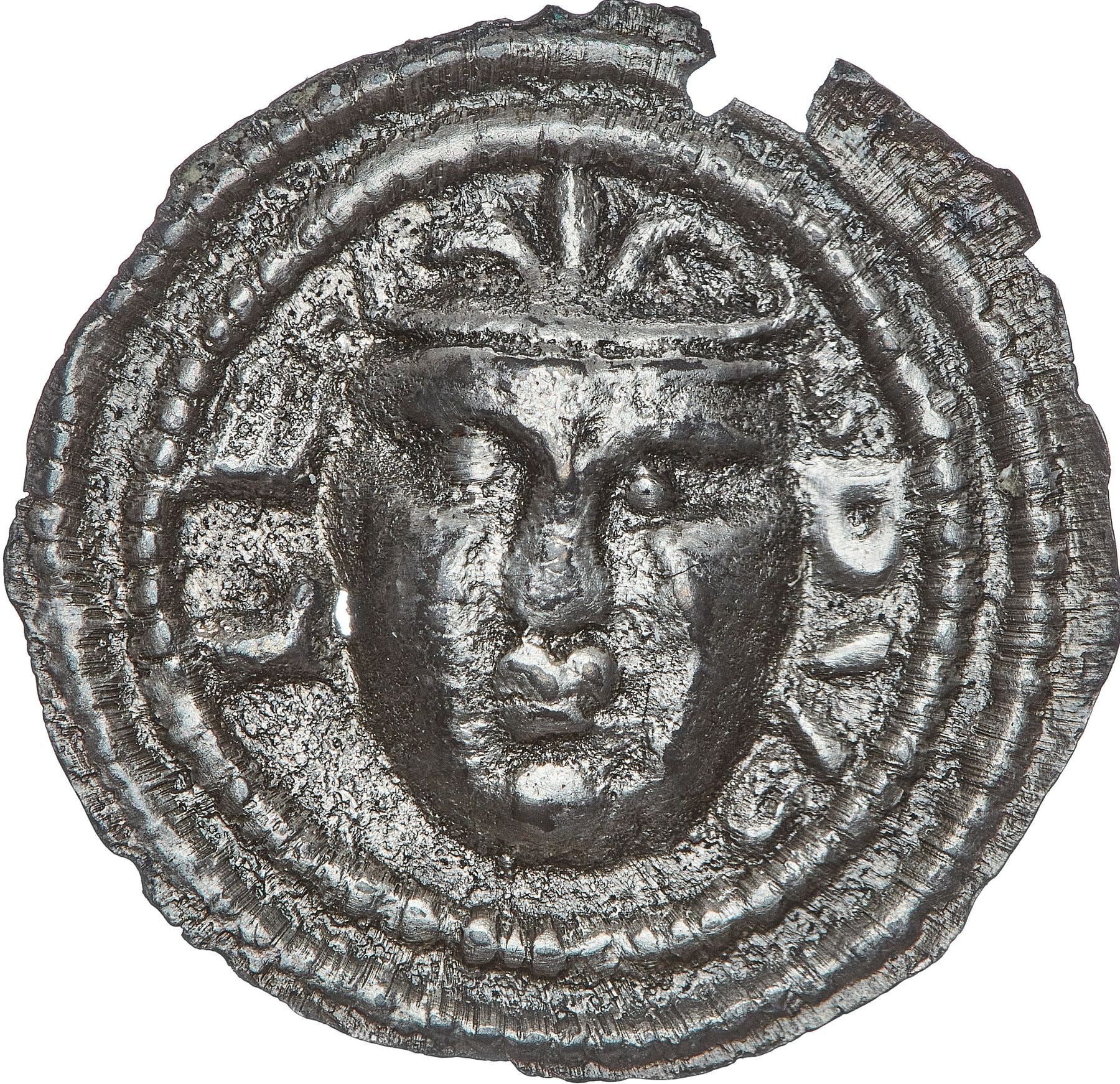
On 27 November 2026, Futura-Sciences (opens in a new tab) retells a find the Stockholm County Administrative Board (opens in a new tab) published on 18 September 2025. Someone digging for fishing worms by a summer house struck a copper cauldron. Inside was early medieval silver. None of those pieces is in Notofilia’s virtual collection. This note does not appraise the hoard.
The hoard
The board writes that the find weighs about six kilograms. Most of it is silver coins, with rings, pendants, and beads, placed in a copper cauldron. It turned up in the Stockholm area. Futura renders the weight as “13 pounds.” That is the board’s “about six kilograms.” This note keeps the Swedish figure.
Sofia Andersson, an antiquarian at the board, says it is probably one of the largest early medieval silver hoards found in Sweden. She adds that they still do not know how many coins there are, but that she thinks there could be upwards of twenty thousand. That sentence is her estimate, not a closed count. Most of the objects are well preserved. The cauldron is not.
The coins
The coins date mainly to the 12th century. Some carry the legend KANUTUS, Latin for Knut. The board places them in the reign of Knut Eriksson, late in that century. Several are uncommon: bishop coins, with a bishop holding a crosier in the right hand. A caption on the board’s site describes three pieces from the hoard. On the left, KANUTUS and King Knut Eriksson. In the center, a Gotland coin that may show a church. On the right, a bishop coin.
Futura attributes to Lin Annerbäck, director of Stockholm’s Medieval Museum, remarks made to Annie Sääf of Dagens Nyheter: that no other medieval hoard of this kind is known in the Stockholm area, and that in a troubled time many people hid the household silver. This note did not open that interview. Futura also prints regnal years and an episode of 1167. This note does not adopt them. The board says only “the late 12th century.”
The board does not give the exact place while archaeologists document the find on its behalf. It will notify the Swedish National Heritage Board (Riksantikvarieämbetet), which decides whether the state pays the finder a compensation.
The law
Andersson says the finder did the right thing by contacting the board. The Cultural Environment Act requires anyone who finds an ancient object of gold, silver, bronze, or another copper alloy to offer it to the state for payment. The same applies to a deposit of two or more objects that seem to have been buried together. The board publishes no figure for that compensation. Neither does this note.
The photograph
The picture is not the cauldron. It is a coin of Knut Eriksson from the Swedish History Museum file, photographed by Helena Bonnevier and published on Wikimedia Commons (opens in a new tab) under CC BY 4.0. The file is titled that way. No legend can be read in the photograph, and this note does not claim it is one of the KANUTUS pieces. It is not a coin from the Stockholm find, not the Richard Grönwall photograph the board offers the press, and not a collection piece. In this collection’s numismatics the hoard has no record. We do not publish the board’s photographs.
Primary sources
- Stockholm County Administrative Board — large medieval silver hoard (18 September 2025) (opens in a new tab)
- Futura-Sciences — the cauldron of 12th-century coins (27 November 2026) (opens in a new tab)
- Wikimedia Commons — coin of Knut Eriksson (Helena Bonnevier / SHM, CC BY 4.0) (opens in a new tab)
Source: Futura-Sciences (opens in a new tab)
Editorial policy, sources, and valuation
Comments
Share your view. Comments appear after they are reviewed.
Loading comments…