Published
Source: Live Science (opens in a new tab)
More than 200 silver tetradrachms in Szombathely
Live Science (22 November 2026) and Vaol (17 November) report more than 200 silver tetradrachms in Szombathely. This note does not repeat a price.
- Reviewed by
- Yezid Acosta
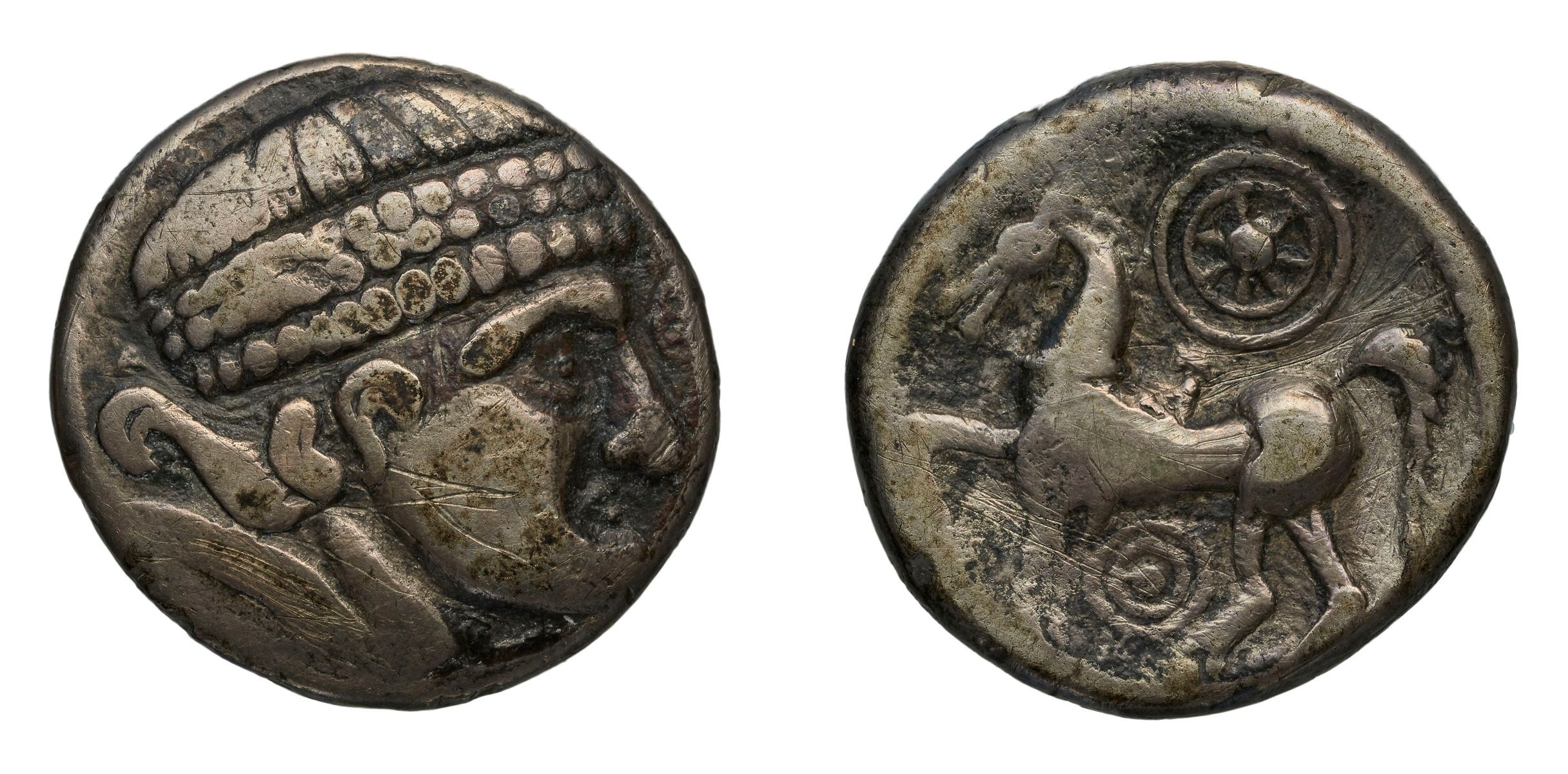
On 22 November 2026, Tom Metcalfe (opens in a new tab) reports in Live Science that more than 200 Celtic silver coins, more than two thousand years old, turned up in Hungary. The headline rounds the age to 2,200 years. The excavation, according to an E.ON statement the magazine says it translated, ran from 2023 to 2025, ahead of an electrical substation in the west of the country. The hoard dates from the late second century BC to the early first century BC. None of those coins is in Notofilia’s virtual collection.
On 17 November 2026, Vaol (opens in a new tab) had already reported the find. The page prints 15:48 and gives no time zone. The city, the type, and the museum come from that report. What only Live Science says is marked as such.
The hoard
Vaol writes that the group is more than 200 pieces and more than two kilograms, and that it lay 30–40 centimetres down. They are silver tetradrachms of the Velem type, from the late second century BC and the early first century BC. The Celts hid them in a pit. Some were placed in a small vessel. Cultivation over the centuries disturbed the deposit, which lay at a shallow depth. The archaeologists first found a few coins. With metal-detector specialists they reached the centre.
Live Science says “roughly 4.4 pounds (2 kilograms)” and “about 16 inches (40 centimeters).” It also writes that the treasure had been packed inside a small ceramic vessel. Vaol does not say that every coin was inside the vessel: it says that some were, and that the group was in a pit. This note does not fold the two sentences into one. Live Science adds that the ground was once part of a farm and that ploughing turned up several loose coins in recent decades. Vaol speaks of centuries of cultivation, not of recent decades. This note does not choose the span.
Live Science’s caption calls this the largest hoard found in Hungary in more than 50 years. In the text, Eszter Kreiter, an archaeologist at the National Archaeological Institute, says at a news conference, according to local outlets Live Science does not name: “This is a rarity in Europe.” She adds that the last similar find in Hungary was in the late 1960s. The Vaol text we opened does not name Kreiter or that comparison.
Vaol names the team: specialists of the National Archaeological Institute of the Hungarian National Museum Public Collection Centre, from 2023 to 2025. The ground for E.ON’s new substation was already an archaeological site, so the archaeological work was part of preparing the construction. They worked before construction and alongside the earth-moving. Live Science shortens the name to “Hungary’s National Archaeological Institute” and speaks of a substation in western Hungary. The caption says the western Szombathely region. Vaol places the works in the city and calls the station Szombathely Észak.
The type
In the “Tudta?” box, Vaol says each tetradrachm is worth four drachmas. The Velem-type pieces found here were probably struck in the Velem–Szentvid area, about 15 km in a straight line from the substation. The reason for the burial divides the archaeologists: an offering to the gods, or silver someone hid in a crisis. Vaol adds that it was fortunate the group came up in the excavation, because the exact position and the archaeological context were documented, not only the coins.
Live Science writes that these coins imitate Greek tetradrachms, and that each has a stylized head, probably Apollo, and on the other side a helmeted rider and a horse. The Vaol text does not describe the designs. This note does not confirm Apollo. Live Science also gives a dollar comparison for the raw silver. This note does not copy it and does not appraise the hoard. Vaol says the find’s importance goes beyond its former purchasing power and that, because of the rarity, the quality of the silver, and the circumstances, today’s value can hardly be expressed in money. This note does not turn that sentence into a figure.
The site
Vaol reports nearly 400 archaeological features and several thousand finds, from the fifth millennium BC to the early modern period. Among the oldest is a small polished-stone adze of nearly 7,000 years, probably for clearing, woodworking, and building. From the Early Iron Age, the 7th–6th centuries BC, a glass bead with a peacock’s-eye pattern, which would have been part of a piece of jewelry. From the same span, vessels in which food and drink were placed beside the dead. From the Celtic period, two intact stones of a hand mill, in a sunken-floored building.
In the Roman period there was a villa. Vaol writes that its buildings were completely taken down over the centuries and the material carried off. The excavation partly reconstructed the plan of the central building. The part uncovered measured about 300 square metres. From there came a brick fragment with a dog’s paw print. The archaeologists say that brick may have covered the heating chamber of the underfloor heating. Live Science attributes to Kreiter, at the same news conference, that the villa was built later without disturbing the silver deposit, and that the plan, including the heating, could be reconstructed. This note leaves Vaol’s “may have” on the brick, and leaves the sentence that the villa did not touch the deposit with Live Science.
Live Science speaks of more than 7,000 years of occupation, of a polished stone chisel nearly 7,000 years old for woodworking, and of the glass bead in the sixth or seventh century BC. Vaol places the bead in the 7th–6th centuries BC and calls the tool a vésőbalta, an adze. This note does not choose a single name for the tool.
The finds will be shown soon in Szombathely, in a temporary exhibition at the Savaria Museum. Vaol gives no dates. Live Science says “a museum exhibition” and does not name the museum. Vaol writes that E.ON’s new substation is already operating on the excavated ground. It names the Danube InGrid project and a sum in forints for the station and the related network. This note does not copy that sum.
The photograph
The picture is not from the Szombathely hoard. It is a silver coin of the Celtic series of Noricum, from the Bibliothèque nationale de France (opens in a new tab), inventory BnF 9916A (GAU-10517). The catalogue notice (opens in a new tab) cites it as Muret and Chabouillet, Catalogue des monnaies gauloises de la Bibliothèque nationale, Paris, 1889, no. 9916A: 11.71 g, 22x23.5 mm, axis 6 h, round planchet, silver. The same notice dates the issue from the late fourth century BC to the early first century AD. That is not a year of striking. This note did not open the 1889 volume. The obverse, on the left, is the profile head in the Wikimedia Commons file (1 of 2) (opens in a new tab), classed there as a head. The reverse, on the right, is the horse and wheel in the file (2 of 2) (opens in a new tab). Both photographs are in the public domain (PD-France). It is not a Velem-type tetradrachm, not a coin from the substation, not the E.ON photograph or Live Science’s, and not a piece in the collection. In this collection’s numismatics the Szombathely hoard has no record. We do not publish the E.ON photographs or Live Science’s.
Primary sources
- Live Science — Tom Metcalfe, the Celtic silver hoard in Hungary (22 November 2026) (opens in a new tab)
- Vaol — the silver at the E.ON substation in Szombathely (17 November 2026) (opens in a new tab)
- BnF — catalogue notice, silver of the Celtic series of Noricum, 9916A (opens in a new tab)
- Gallica — silver coin, Celtic series, Noricum, ark btv1b112922461 (opens in a new tab)
- Wikimedia Commons — obverse, BnF 9916A (1 of 2) (opens in a new tab)
- Wikimedia Commons — reverse, BnF 9916A (2 of 2) (opens in a new tab)
Source: Live Science (opens in a new tab)
Editorial policy, sources, and valuation
Comments
Share your view. Comments appear after they are reviewed.
Loading comments…