Published
Source: Medievalists.net (opens in a new tab)
Six Arab dirhams turn up near Viking-age Truso, in Poland
The Archaeological and Historical Museum in Elbląg received six Arab dirhams and two fragments found in the Młynary forest, near the old Viking-age port of Truso.
- Reviewed by
- Yezid Acosta
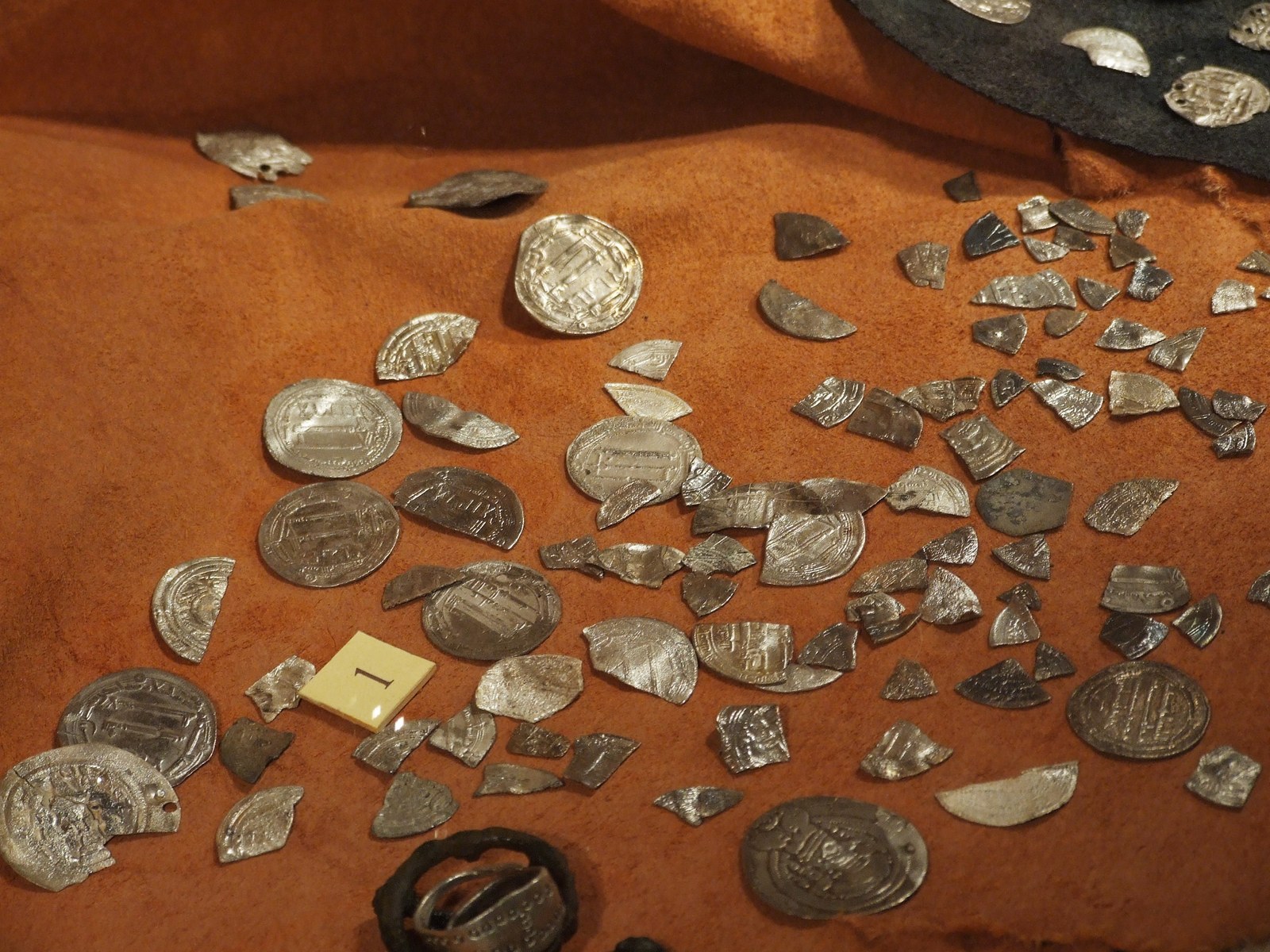
Medievalists.net (opens in a new tab) reported on 28 September 2026 that six Arab dirhams and two fragments of silver coins had surfaced in a forest managed by the Młynary Forest District, near the city of Elbląg in northern Poland. TVP World (opens in a new tab) carried the same report in its English edition. The finds first went to the regional heritage office in Elbląg and then passed to the Archaeological and Historical Museum in Elbląg, where they will undergo conservation and further study.
"Six early medieval Arab dirhams and two fragments of these silver coins were discovered," said Dr. Jakub Jagodziński of the Archaeological and Historical Museum in Elbląg, speaking to the Polish Press Agency (PAP) (opens in a new tab). "They come from the first half of the ninth century, although more precise dating will only be possible after they have been studied. It is possible that they remained in circulation even until the turn of the tenth and eleventh centuries, that is, until the end of the Truso settlement, with whose trading activity this find should be associated."
A possible link to Truso
The find site intrigues archaeologists. Truso was a major early medieval trading settlement on Lake Druzno, less than 10 kilometres from modern Elbląg. Jagodziński suggests the silver could have belonged to merchants travelling the routes to or from Truso, or to Prussian guards who collected tolls from travellers. Truso was identified archaeologically in 1981, after a long search for the settlement the Anglo-Saxon traveller Wulfstan described in the late ninth century. Research indicates Scandinavians founded it toward the end of the seventh century and kept it active until the early eleventh: its position near the mouth of the Vistula placed it in trading networks reaching Kievan Rus', Byzantium, and the Islamic world.
The 1986 precedent
Arab silver is not new to the region. In 1986, excavations at Truso itself uncovered a deposit of 11 complete coins and 5 fragments. Ten of the identifiable pieces were Abbasid dirhams; the remaining one was a Sasanian drachma struck under the Persian king Khosrow II. According to the Archaeological and Historical Museum in Elbląg, the coins in that deposit were minted in Baghdad, Basra, and Damascus, plus mints now in Iran and Afghanistan; the youngest coin in the group was struck in 814/815.
Arab silver in the Baltic
Arab dirhams circulated in enormous numbers across northern and eastern Europe during the Viking Age. Their spread is archaeological evidence of the extensive trade networks that linked Scandinavia and the Baltic with eastern Europe, Byzantium, and the Islamic world. This 2026 find is not part of Notofilia's virtual collection: it is documented here as a reference on the circulation of Islamic silver in the early medieval Baltic.
Primary sources
Source: Medievalists.net (opens in a new tab)
Editorial policy, sources, and valuation
Comments
Share your view. Comments appear after they are reviewed.
Loading comments…