United States · United States Mint
Morgan dollar coin, 1893
Morgan dollar · Philadelphia · 1893
Philadelphia Morgan dollar, 1893, no mint mark under the wreath. .900 silver, George T. Morgan. No serial, no VAM, and unslabbed.
Catalog facts
- Year
- 1893
- Mint
- Philadelphia (no mint mark)
- Denomination
- 1 dollar
- Composition
- Silver .900 (90% Ag, 10% Cu); type fineness, not an assay of this specimen
- Weight
- 26.73 g (type weight; this specimen was not weighed)
- Diameter
- 38.10 mm (type measurement; this specimen was not measured)
- Edge
- Reeded (published type; the edge is not in the photographs)
- Condition
- Unslabbed. Uneven dark toning, marks, and wear are visible. Not a numerical grade.
- References
- KM# 110 · PCGS# 7220 · N# 1492
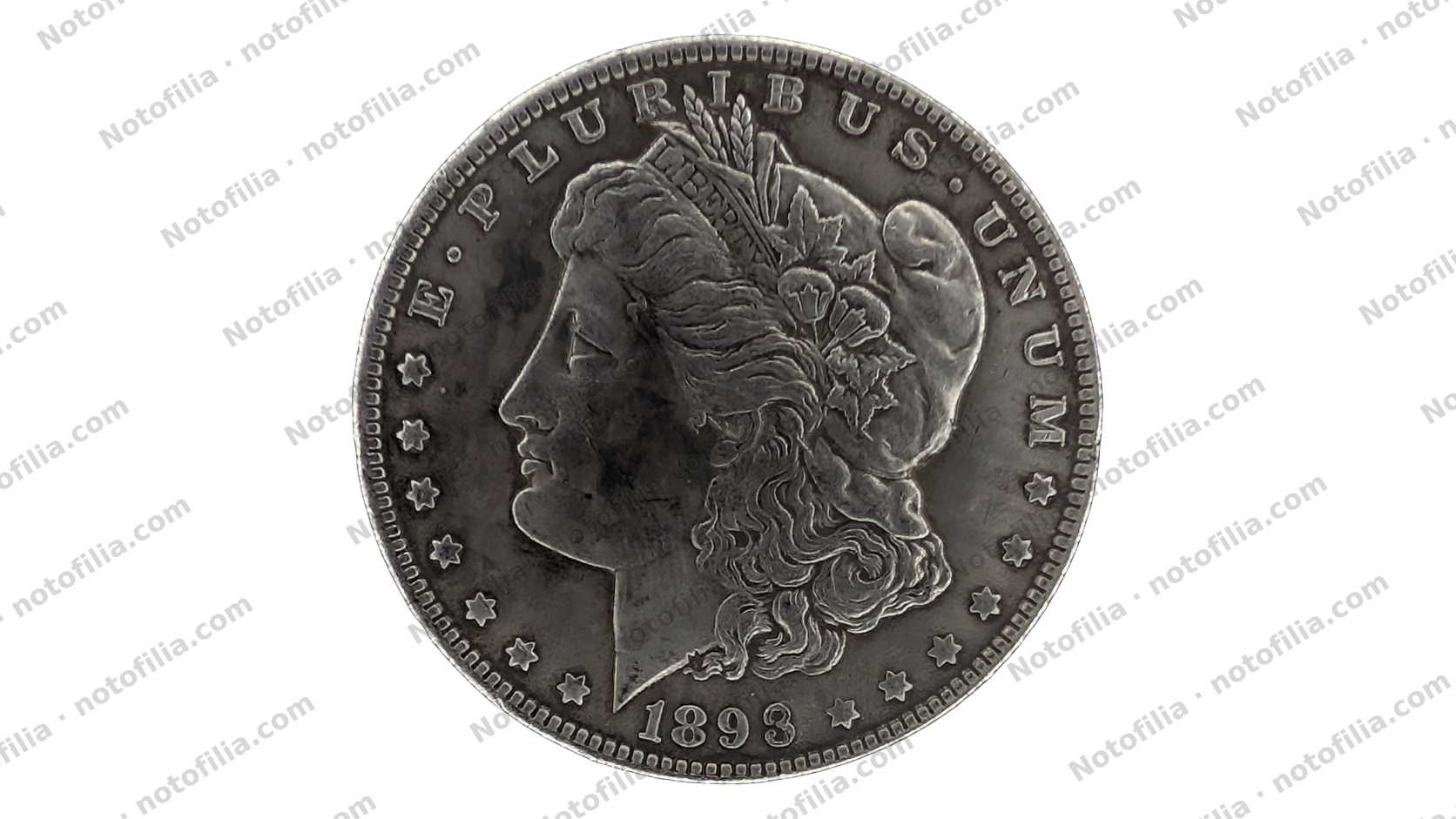
Obverse
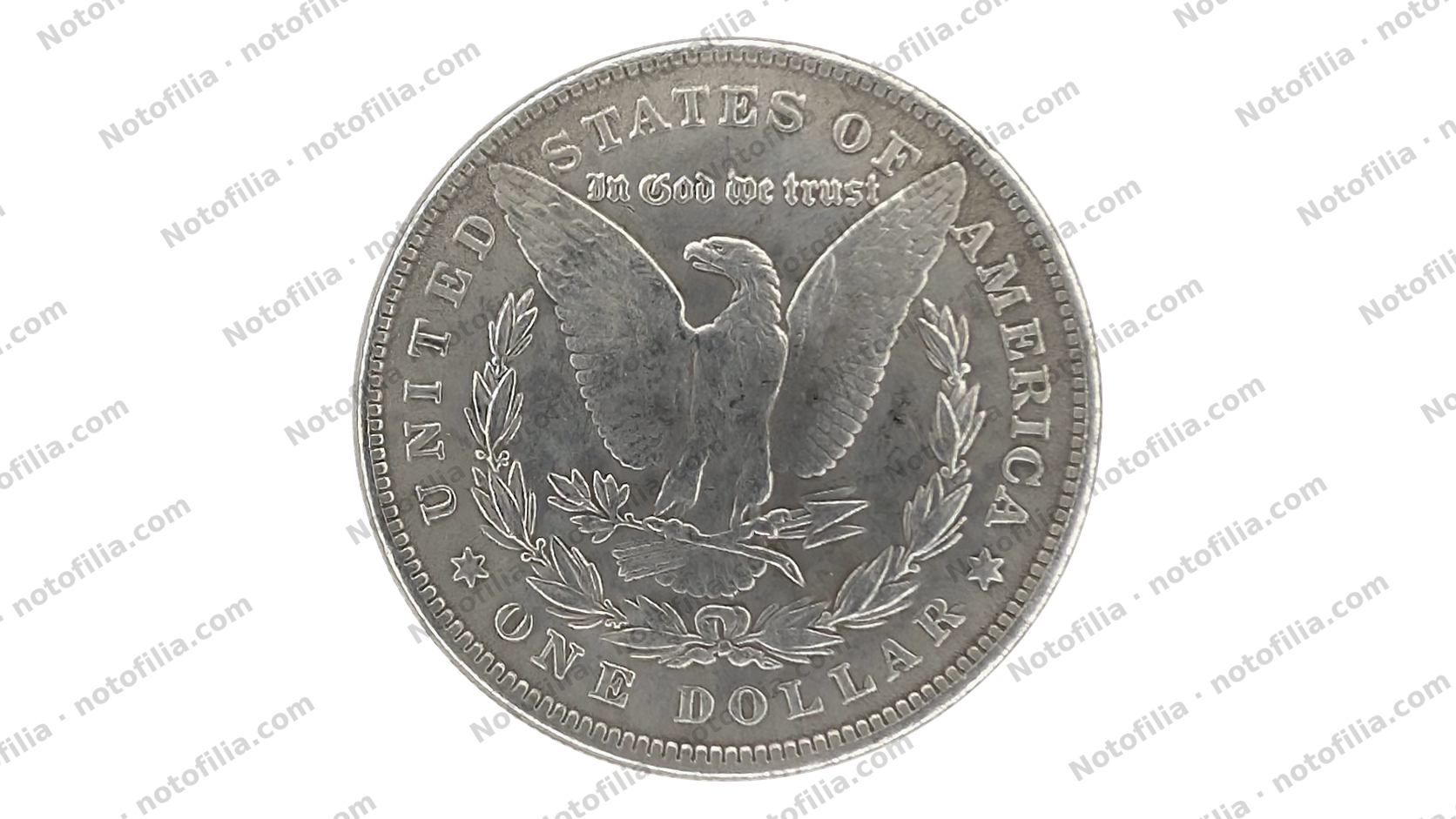
Reverse
The coin
This piece is an 1893 Morgan dollar struck at Philadelphia. The obverse shows Liberty facing left, in a Phrygian cap with cotton and wheat, the band LIBERTY, and the legend E PLURIBUS UNUM; below, the date 1893 among thirteen stars. The reverse carries the eagle with spread wings, arrows and an olive branch, IN GOD WE TRUST above the bird, UNITED STATES OF AMERICA on the arc, and ONE DOLLAR under the wreath. There is no letter under the bow: Philadelphia does not mark its Morgans. PCGS numbers the business strike with no mint mark 7220. The type is 900-fine silver, 26.73 g and 38.10 mm, with a reeded edge: those are issue standards, not a weight or a caliper reading of this example. The photographs do not show the edge. The type carries an M for Morgan on the neck truncation and on the reverse bow; these photographs do not show that letter clearly enough to record it. No VAM variety is assigned. PCGS lists VAM-4, Doubled Stars, among the varieties of the date; these photographs do not establish it. PL and DMPL are not assigned either. The piece is raw, with no holder. The photographs show uneven dark toning, surface marks, and wear. That is not a numerical grade, and it does not confirm authenticity or a cleaning.
Legends
- Obverse
- E PLURIBUS UNUM · LIBERTY on the band · thirteen stars · 1893.
- Reverse
- UNITED STATES OF AMERICA · IN GOD WE TRUST · ONE DOLLAR · no mint mark under the bow.
History
The coinage act of 1873 dropped the standard silver dollar. On 28 February 1878 Congress overrode the veto and passed the act that authorizes it again, known as Bland-Allison. George T. Morgan engraved the type. Philadelphia struck the series with no mint mark. The 1893 date falls in the banking panic of that year. The Q. David Bowers text that PCGS reprints, taken from the report of the Director of the Mint, places the suspension of business-strike coinage on 1 June 1893, except for 245 proofs, and the repeal of the purchase clause of the Sherman Act of 14 July 1890 on 1 November 1893. The circulation deliveries it records are 200,000 in January, 150,000 in February, and 28,000 in April: they sum to 378,000. PCGS heads the 7220 record with 389,000, and the same commentary notes 378,000, or 389,000 according to the Guide Book. Numista (N# 1492) gives 378,000 on the 1893 line with no mint mark and lists 792 proofs apart. This record does not treat either mintage as the single uncontested figure. The photographed example shows wear and is recorded as a circulation strike, not a proof. The 1893-CC, the 1893-O, and the 1893-S are other pieces. This record publishes no price.
Scarcity and type
PCGS CoinFacts (7220) publishes 389,000 as the headline mintage of the 1893 Philadelphia dollar. The Bowers commentary on that same record gives 378,000, or 389,000 according to the Guide Book, and breaks out the deliveries: 200,000 in January, 150,000 in February, and 28,000 in April. Numista lists 378,000 on the circulation line and 792 proofs on another. The gap between 378,000 and 389,000 is stated; this record does not resolve it. PCGS estimates 40,000 survivors in all grades, 20,000 in 60 or better, and 750 in 65 or better. Those are expert estimates — they include raw pieces and coins certified by any service — not a certificate census and not the state of this example. Bowers places the 1893 Philadelphia dollar, in Mint State, after the 1901 and the 1894, not counting the 1895 business strike, which is not known outside the Mint; the 1894 and the 1901 are, on that account, much scarcer. In worn grades the date is easier to find. None of this fixes the grade of this piece. No price is published. The 1893-O, the 1893-CC, and the 1893-S are other coinages.
Certification
The example is raw, with no PCGS, NGC, or other holder, and with no certification number. This module carries no serial number. The identity of this record is the photographed object — date 1893 and no mint mark under the bow — not a certificate. The dark toning, the marks, and the wear show in the photographs; they do not confirm authenticity, a prior cleaning, or a numerical grade. No VAM, PL, or DMPL is assigned. The weight and diameter on this record are the type standards, not a measurement of this piece. If it is later slabbed, the cert number will replace this note.
Sources
- PCGS CoinFacts — 1893 Morgan dollar (7220) (opens in a new tab)
George T. Morgan; Philadelphia; business strike. 90% silver, 26.73 g, 38.10 mm, reeded edge. Headline 389,000. Bowers notes 378,000 (or 389,000 per the Guide Book), January, February, and April deliveries, and suspension on 1 June 1893. Survival estimate: 40,000, 20,000 in 60 or better, and 750 in 65 or better. VAM-4 is on the list; it is not attributed here. Prices are not republished.
- Numista — Morgan dollar (N# 1492) (opens in a new tab)
KM# 110; 1878–1921; .900 silver; 26.73 g; 38.1 mm; reeded edge. The 1893 line with no mint mark gives 378,000; the proofs, 792, are listed apart. The 1893-CC, the 1893-O, and the 1893-S are other coinages. Prices are not republished.
- United States Mint — One hundred years of silver dollar coinage (1878–1978) (opens in a new tab)
Bland-Allison restores the 1837 weight and fineness. Design by George T. Morgan: Liberty and a heraldic eagle. Philadelphia strikes from 1878 and uses no mint mark.
- 20 Stat. 25 — Standard silver dollar act (28 Feb. 1878) (opens in a new tab)
Authorizes the legal-tender silver dollar and orders the monthly purchase of silver, between two and four million dollars, to be coined.
Related pieces
Another piece in the United States collection.