United States · San Francisco mint
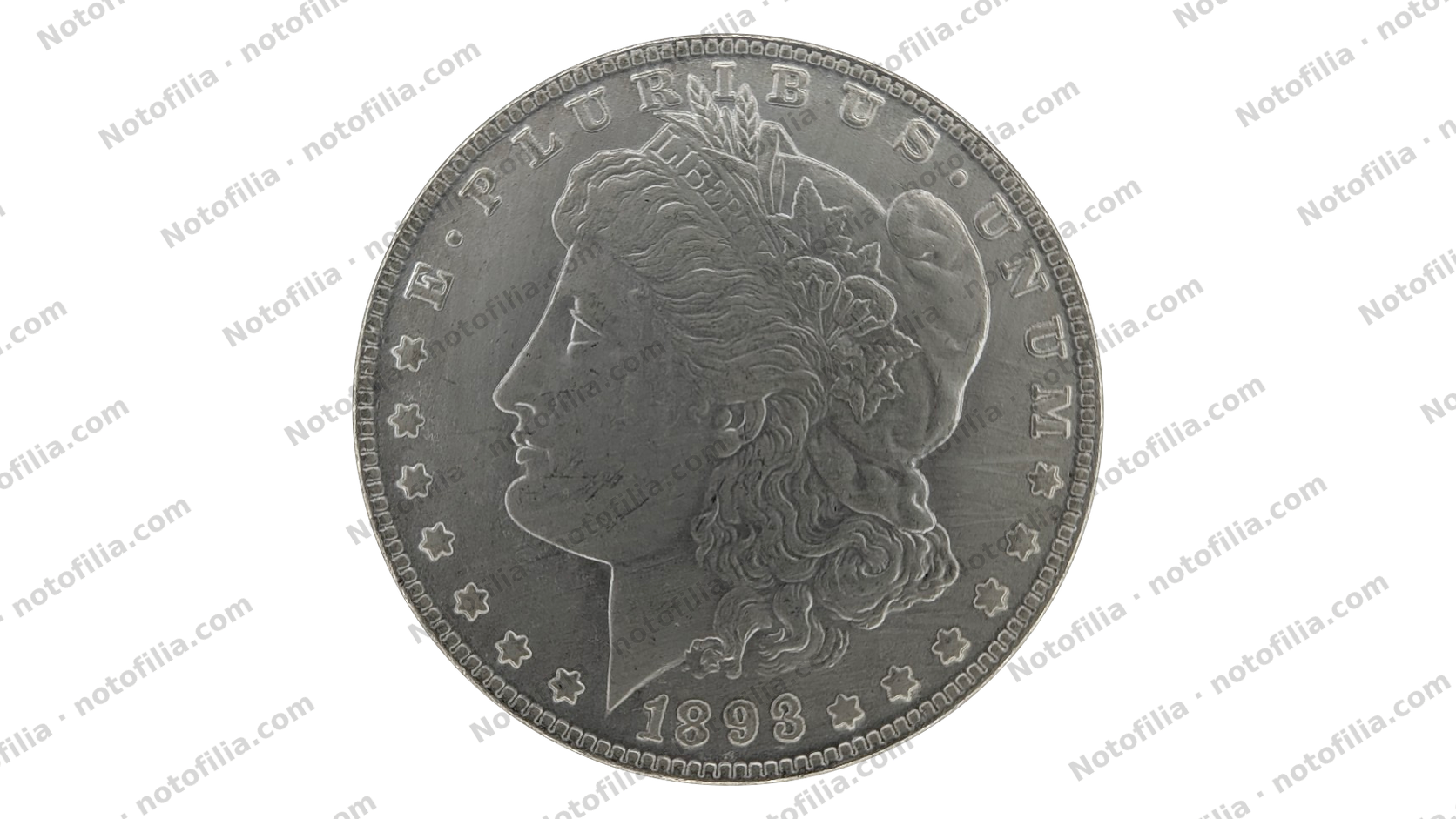
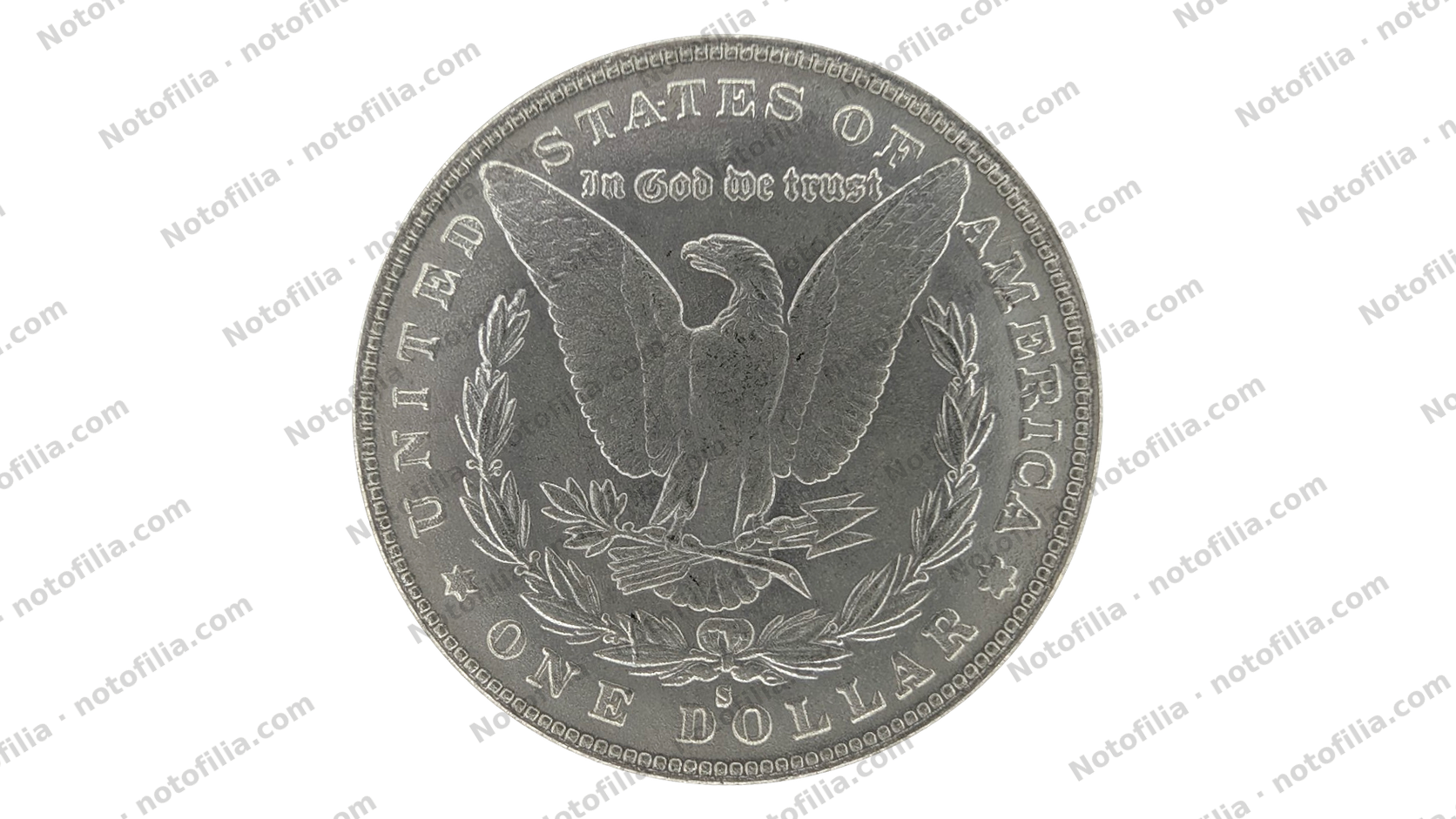
Morgan dollar coin, 1893
Morgan dollar · San Francisco · 1893
1893 Morgan dollar, San Francisco mint, S under the bow. .900 silver by George T. Morgan. No serial, no holder, and no VAM. Key date of the circulation issue. The photographs do not confirm authenticity.
Catalog facts
- Year
- 1893
- Mint
- San Francisco (S mint mark)
- Denomination
- 1 dollar
- Composition
- Silver .900 (90% Ag, 10% Cu); type fineness, not an assay of this specimen
- Weight
- 26.73 g (type weight; this specimen was not weighed)
- Diameter
- 38.10 mm (type measurement; this specimen was not measured)
- Edge
- Reeded (published type; the edge is not in the photographs)
- Condition
- Unslabbed. Scratches on Liberty’s cheek and chin, and uneven texture. Not a numerical grade and not a cleaning attribution.
- References
- KM# 110 · PCGS# 7226 · N# 1492
Obverse
Reverse
The coin
This piece is photographed as an 1893 Morgan dollar with an S mint mark. The obverse shows Liberty facing left, in a Phrygian cap with cotton and wheat, the band LIBERTY, E PLURIBUS UNUM, thirteen stars, and the date 1893. The reverse carries the eagle with spread wings, arrows and an olive branch, IN GOD WE TRUST above the bird, UNITED STATES OF AMERICA on the arc, and ONE DOLLAR under the wreath. The letter under the bow, above DOLLAR, reads S. PCGS numbers the 1893-S business strike 7226. The type is 900-fine silver, 26.73 g and 38.10 mm, with a reeded edge: those are issue standards, not a weight or a caliper reading of this example. The photographs do not show the edge. The type carries an M for Morgan on the neck truncation and on the reverse bow; these photographs do not show that letter clearly enough to record it. No VAM variety is assigned. The genuine 1893-S is catalogued as two reverses (VAM-1 and VAM-2) with a single obverse; these photographs are not enough for that die pair. PL and DMPL are not assigned either. The piece is raw, with no holder. Scratches cross the portrait — on the cheek and chin — and the fields show uneven texture. That is not a numerical grade, and it does not confirm a cleaning or authenticate the piece. This date is imitated with added mint marks and reworked dates. The photographs do not resolve the die scratch through the upright of the T in LIBERTY or the “rabbit ears” at the left foot of the R. Authenticity is not confirmed from photographs alone.
Legends
- Obverse
- E PLURIBUS UNUM · LIBERTY on the band · thirteen stars · 1893.
- Reverse
- UNITED STATES OF AMERICA · IN GOD WE TRUST · ONE DOLLAR · S mint mark under the bow.
History
The coinage act of 1873 dropped the standard silver dollar. On 28 February 1878 Congress overrode the veto and passed the act that authorizes it again, known as Bland-Allison. George T. Morgan engraved the type. San Francisco marks its Morgans with an S, under the bow. The 1893 date falls in the banking panic of that year. In July 1890 the Sherman Silver Purchase Act had raised the monthly purchase to 4.5 million ounces; Treasury Notes of 1890 were redeemed in gold, and the gold reserve fell through the legal floor. Grover Cleveland called a special session and, late in 1893, Congress repealed the purchase clause. Without new silver, the mintages of 1893 to 1895 went short. PCGS (7226) and Numista (N# 1492) give the 1893-S a mintage of 100,000: the lowest of the original-run circulation issue. The accounts place it paid out at once into California and Western trade, not held in vaults. The Philadelphia 1893, the 1893-CC, and the 1893-O are other coinages. This record describes the photographed object; it does not assert authenticity or publish a price.
Scarcity and type
PCGS CoinFacts (7226) publishes the San Francisco mintage: 100,000. Numista (N# 1492) lists the same figure on the 1893 S line. The same PCGS record estimates 9,948 survivors in all grades, 123 in 60 or better, and 18 in 65 or better. Those are expert-opinion averages — they include raw pieces and coins certified by any service — distinct from the mintage and from a slab census, and the categories overlap — they are not additive. Commentary on that record warns that the high-grade figure may be high, and places Bowers between 6,000 and 12,000 survivors in all grades. None of this fixes the state of this piece or authenticates the photographed object. This record publishes neither a slab census nor a price. The Philadelphia 1893, the 1893-CC, and the 1893-O are other coinages.
Certification
The example is raw, with no PCGS, NGC, or other holder, and with no certification number. This module carries no serial number. The identity of this record is the photographed object — date 1893 and an S under the bow — not a certificate. The scratches on the portrait and the uneven texture show in the photographs; they do not confirm authenticity, a prior cleaning, or a numerical grade. The photographs do not resolve the scratch in the T of LIBERTY or the “rabbit ears” on the R. No VAM, PL, or DMPL is assigned. The weight and diameter on this record are the type standards, not a measurement of this piece. If it is later slabbed, the cert number will replace this note.
Sources
- PCGS CoinFacts — 1893-S Morgan dollar (7226) (opens in a new tab)
George T. Morgan; San Francisco; business strike. 90% silver, 26.73 g, 38.10 mm, reeded edge. Mintage 100,000. Survival estimate: 9,948, 123 in 60 or better, and 18 in 65 or better. The record’s commentary flags uncertainty at high grade. Prices and a slab census are not republished.
- Numista — Morgan dollar (N# 1492) (opens in a new tab)
KM# 110; 1878–1921; .900 silver; 26.73 g, 38.1 mm; reeded edge. The 1893 S line gives 100,000. The 1893 with no mint mark, the 1893-CC, and the 1893-O are other coinages. Prices are not republished.
- United States Mint — One hundred years of silver dollar coinage (1878–1978) (opens in a new tab)
Bland-Allison restores the 1837 weight and fineness. Design by George T. Morgan: Liberty and a heraldic eagle. San Francisco strikes from 1878.
- 20 Stat. 25 — Standard silver dollar act (28 Feb. 1878) (opens in a new tab)
Authorizes the legal-tender silver dollar and orders the monthly purchase of silver, between two and four million dollars, to be coined.
- PCGS — The 1893-S on CoinFacts (opens in a new tab)
Cited diagnostics for a genuine 1893-S: a die scratch through the upright of the T in LIBERTY and “rabbit ears” at the left foot of the R. This record does not confirm them from the photographs. Prices are not republished.
Related pieces
Another piece in the United States collection.