Published
Source: BBC (opens in a new tab)
The first part of the Springhead Hoard
BBC (10 November 2026) puts the first part of the Springhead Hoard at £23,240. It does not say whether the premium is inside.
- Reviewed by
- Yezid Acosta
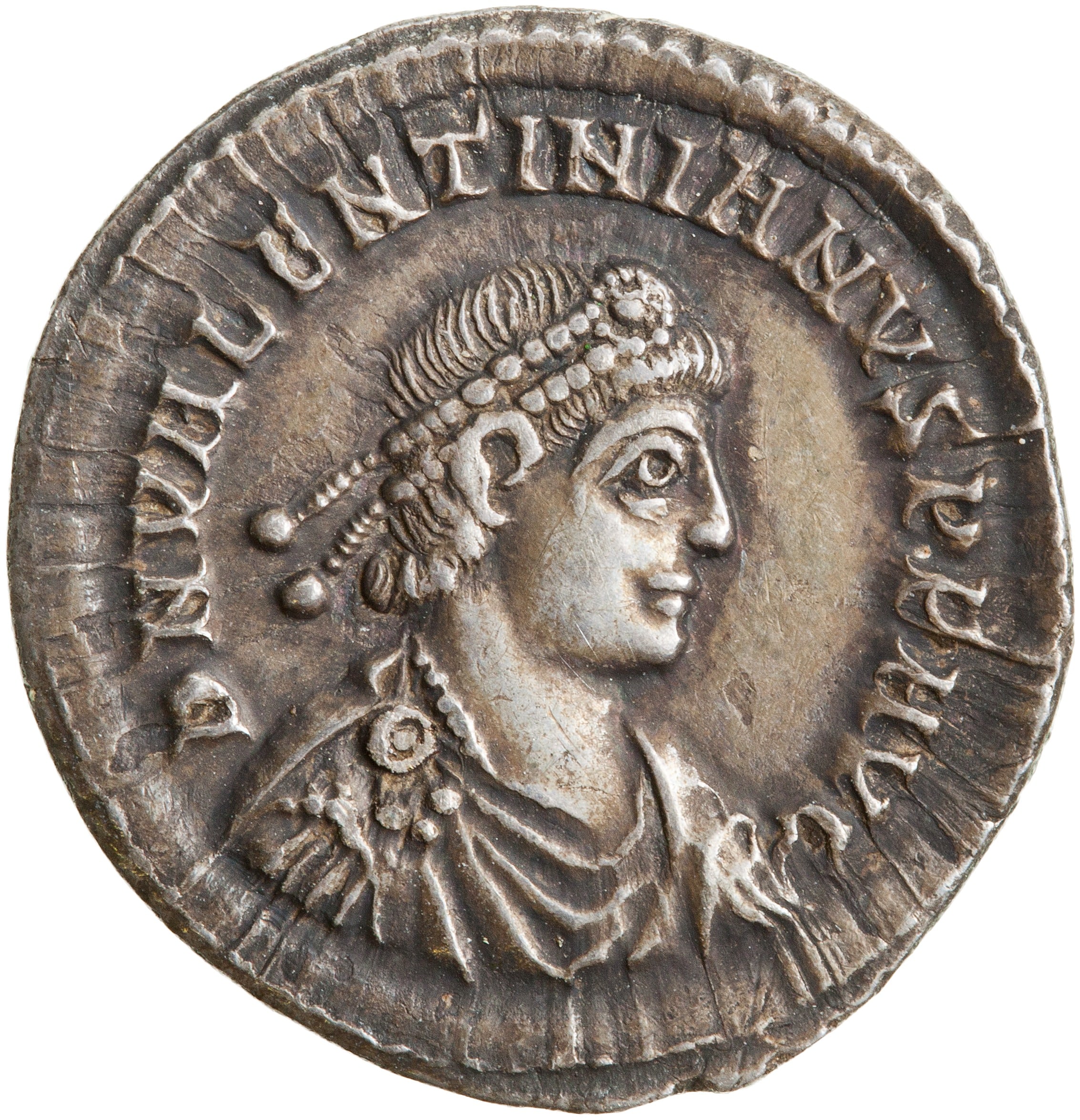
On 10 November 2026, Tanya Gupta (opens in a new tab) reported in the BBC that the first part of the Springhead Hoard sold that Tuesday for a total of £23,240. Noonans (opens in a new tab) had set the auction for Tuesday 10 November at 15:00. The siliqua in the photograph is not from that hoard, and no Springhead coin is in Notofilia’s virtual collection.
The total
Noonans’s note of 2 November presents part I as 114 siliquae, with an estimate of up to £15,000. The BBC writes that the £23,240 beat that expectation. The BBC headline rounds the sale to £23,000. One paragraph says “over £23,000.” The total, further down, is £23,240. The BBC does not say whether the buyer’s premium is inside it. The pages of the catalogue (opens in a new tab) this note opened label each lot’s result “Hammer Price.” This note does not add those hammers up to test the £23,240, and it does not invent a premium.
The gold from the find is not in this sale. In the catalogue foreword, Richard Taylor, honorary secretary of the Gravesend Historical Society, writes that the British Museum kept 27 coins, including the gold, and that the society bought the remaining 420 silver siliquae, with the reward and a sum from its museum fund. The BBC gives the 27 and the 420, and does not name the metal of the museum’s coins.
The find
Taylor dates the find to 22 October 1964. The widening of the A2 turned up late gold and silver, struck from Constantius II to Magnus Maximus. Someone hid them around the 380s and did not come back. He tells the BBC that a mechanical excavator broke the ceramic vessel and that it was “the find of a lifetime.” Bradley Hopper, head of the coin department at Noonans, places the deposit in 388 or very shortly after. The span, he writes, runs to the aftermath of the death of Magnus Maximus on 28 August 388. This note does not choose the year.
The foreword quotes the excavation report: of 447 coins recovered, the greater part was due to the society’s efforts. The BBC puts those 447 in the mouth of Victor Smith. Smith, in the Noonans note, remembers the knees, the strings, and the machines: he was in the last line and found only two. A few coins from the hoard stay in Gravesend, Taylor writes. The rest of the sale, Noonans says, comes in the spring of 2027. The BBC says “next spring.”
A year earlier, in 1963, Smith and Alan Ridgers found a bronze of Marcus Aurelius while field walking. Ridgers tells it to the BBC and in the Noonans note: “That was a life-changing moment.” That coin is not the 1964 hoard.
The division and the mint
In January 1965, at Northfleet Town Hall, the inquest declared the hoard Treasure Trove. That is what the Noonans note writes. The BBC says “In 1965” and does not name the hall.
Hopper writes that Trier dominates, and that Gratian, Valens, and Magnus Maximus are the most numerous. The pieces he highlights on 2 November are estimates, not results. Lot 594, Magnus Maximus, Trier, 383–388, runs from £150 to £200. Lot 590, Valentinian II, Aquileia, 378–383, runs from £100 to £150. Lot 552, Gratian, Trier, 367–378, with Roma seated, runs from £100 to £150. Lot 572, of the same type and with golden toning, also runs from £100 to £150. This note does not turn those estimates into hammer prices. Hopper adds that the field did not disperse the group and that it was recovered before pesticides, and that many coins therefore keep their lustre. The BBC picks up the point about agriculture and chemicals, and the phrase “remarkably fresh.”
Vagniacis
The society was founded in 1924. Taylor remembers Bill Penn and the Sundays, from 1950, on the temples, shops, and roads of Vagniacis. The BBC speaks of every Sunday in the 1950s, and of a roadside settlement and a religious centre. In the foreword, Taylor adds Watling Street and the stop to pray for health and fortune. He tells the BBC that one can only speculate: whether the money was arriving from the Continent or on its way back, and that we may never know. This note does not choose. The proceeds, Taylor writes, go to the archive: storage, conservation, and digitisation. The BBC says they support the work on that archive.
The photograph
The picture on this note is not a Springhead coin. It is the obverse of a silver siliqua of Valentinian II, mint of Siscia, 375–378, from the American Numismatic Society (opens in a new tab), inventory 1948.19.801. The record cites it as RIC IX Siscia 19C: 1.98 g, 18.5 mm. The obverse reads D N VALENTINIANVS P F AVG. The reverse, which the photograph does not show, carries VOT XV MVLT XX in a wreath and the mark SISCPS. The photograph is by Emma Pratte and is on Wikimedia Commons (opens in a new tab) under a public-domain dedication (CC0). It is not Trier, it is not lot 590 of Aquileia, it is not the coin in the BBC photograph, it is not the gold the British Museum kept, and it is not a piece in the collection. In the collection’s numismatics this hoard has no record. We do not publish the Noonans photograph or the BBC’s.
Primary sources
- BBC — Tanya Gupta, the Springhead Hoard and £23,240 (10 November 2026) (opens in a new tab)
- Noonans — part I of the Springhead Hoard, note of 2 November 2026 (opens in a new tab)
- Noonans — catalogue of part I, 10 November 2026 (opens in a new tab)
- American Numismatic Society — siliqua of Valentinian II, Siscia, 1948.19.801 (opens in a new tab)
- Wikimedia Commons — obverse of siliqua 1948.19.801, photograph by Emma Pratte (opens in a new tab)
Source: BBC (opens in a new tab)
Editorial policy, sources, and valuation
Comments
Share your view. Comments appear after they are reviewed.
Loading comments…