Published
Source: Numismatic News (opens in a new tab)
Seven 1982 cents remain in circulation
Numismatic News (9 November 2026) sorts seven 1982 cents: copper and zinc, large and small dates. San Francisco struck a proof.
- Reviewed by
- Yezid Acosta
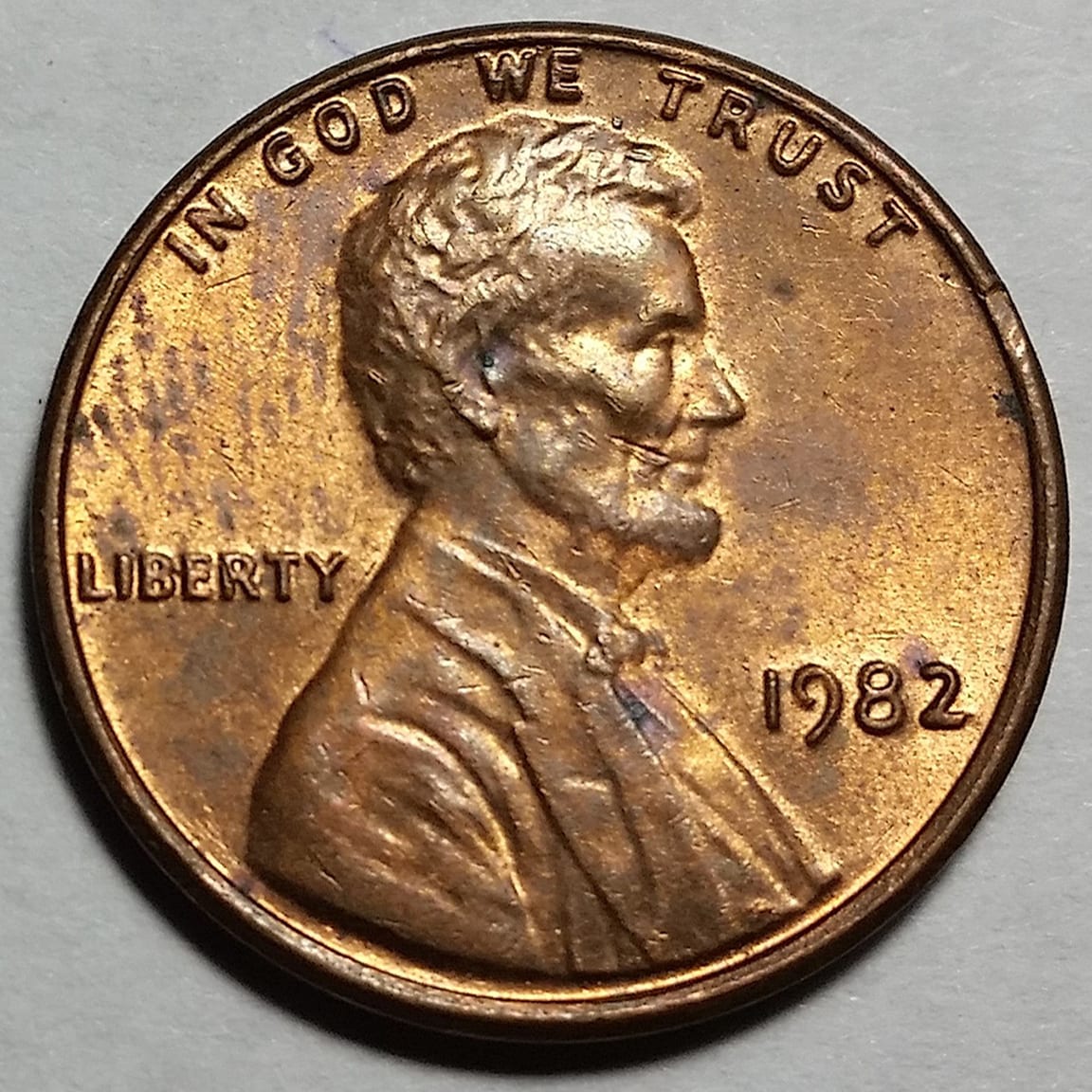
On 9 November 2026, Numismatic News (opens in a new tab) (the staff) publishes the Item of the Week on the 1982 Lincoln cents. The headline counts seven circulating varieties. Those coins are not in Notofilia’s virtual collection.
Before the change
The column says most people think the cent’s composition changed only with the 1943 steel pieces. From 1944 to 1946 the United States Mint used an alloy drawn from shell casings, with a little tin in it. Until 1962 the mix was 95 percent copper and 5 percent zinc and tin. That year it became 95 percent copper and 5 percent zinc: the tin went. In December 1973 the Treasury secretary was given power to change the composition. The trial path was aluminum. More than a million 1974 aluminum cents were struck. Copper fell in price, the idea met serious opposition, and those pieces were destroyed before release. A few remained because they had been handed out as samples to officials. That is the column’s account.
The text mentions a Research Triangle Institute report that called for dropping the cent, on cost and on poor circulation. This note does not open that report. The column closes with buying advice and gives no price. None is invented here.
Two metals, seven coins
In 1982 costly copper forced the decision again. The new composition is 97.5 percent zinc and 2.5 percent copper. The copper is a plating, so the coin still looks familiar. The new cents weigh 2.5 g. The old composition weighs 3.11 g. Those are the column’s figures. We did not weigh a coin.
The date was modified too, as it had been in 1960 and in 1970, and large and small dates came out. The column builds the seven circulating pieces this way. Philadelphia: copper large date, copper small date, zinc large date, and zinc small date. Denver: copper large date, zinc large date, and zinc small date. It does not name a Denver copper small date, and this note does not turn that silence into a rarity. The San Francisco mint struck a proof, apart from those seven. The column says none of the seven is rare.
The photograph
The picture is the obverse of a 1982 cent. The file title calls it copper, large date. It is on Wikimedia Commons (opens in a new tab), by noy-nac (2017), under CC BY-SA 4.0 (opens in a new tab). The category groups it with Philadelphia coins. This photograph is not enough to read a mint mark or to set the date beside a small date, and it does not weigh the planchet. It is not a collection piece. In this column, weight is what separates the copper from the zinc. That is pocket numismatics.
Primary sources
Source: Numismatic News (opens in a new tab)
Editorial policy, sources, and valuation
Comments
Share your view. Comments appear after they are reviewed.
Loading comments…