Design
Reverse
Reverso
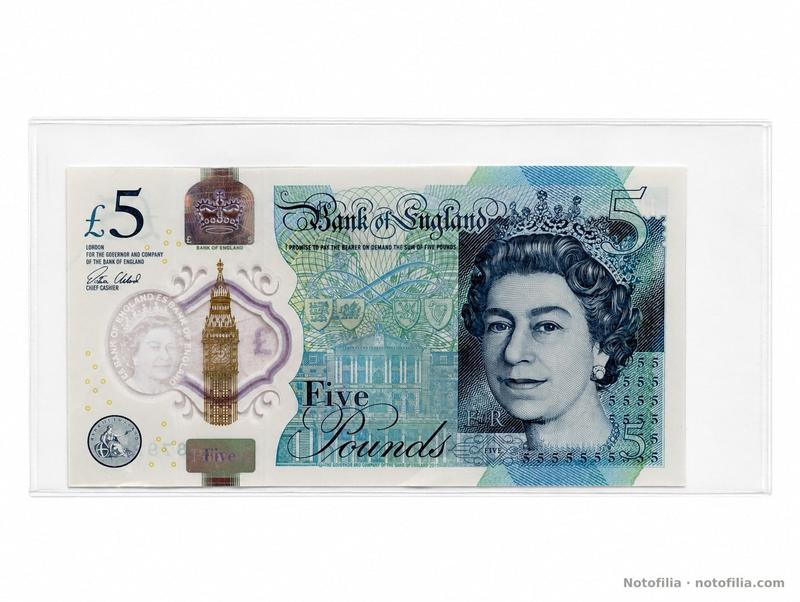
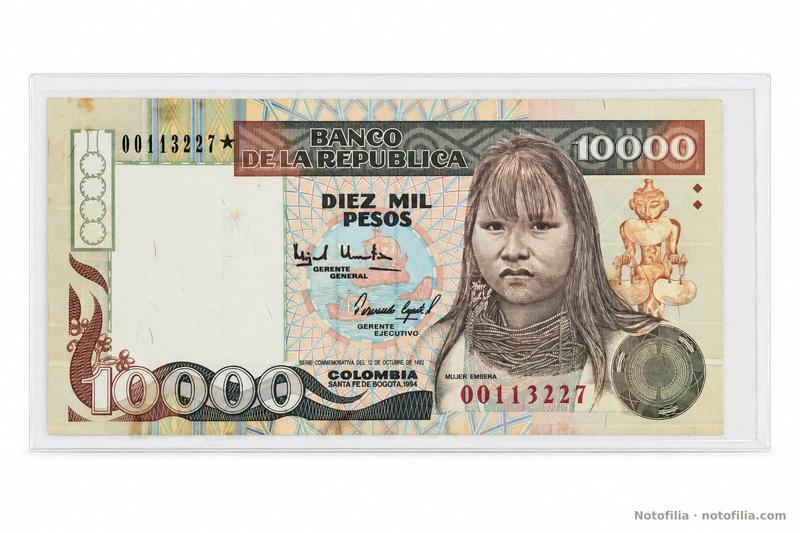
The reverse is the back of a banknote: the face the issuer treats as the verso. It often carries a building, a landscape, a map, or a secondary scene, and sometimes the second serial. It is not “the less important side”: on this collection’s polymer £5, Churchill, Westminster, and the BLENHEIM foil sit on the reverse, while the promise and Elizabeth II occupy the obverse. On the 1994 Emberá 10,000 the back gathers Colombian birds and Waldseemüller’s world map; the starred serial, by contrast, is read on the face.
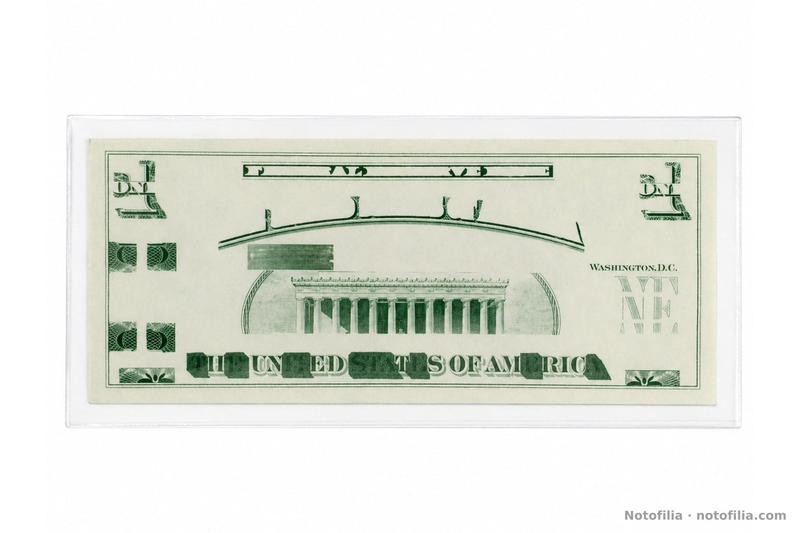
Describing both sides prevents misidentification. A cutting error may show on only one reverse edge; mismatched serials, at both ends of the back, as on some reduced-format 2,000-peso notes. The Giori Lincoln Memorial is uniface: the reverse is blank on purpose, and that absence is the fact, not a photography fault. ABNC proofs are sometimes recorded as a p1/p2 pair, face and back separately, each slabbed.
On coins the reverse is the cross, the value, or the shield, opposite the effigy obverse. The 1820 Santa Marta cuartillo is described with Numista’s two assignments — S/M cross and 1/4 crown — without forcing “national side” names. This collection photographs the reverse with the same care as the obverse and does not crop one of the two to “beautify” the record.
A blank reverse, a Canal Bank red back, and a Churchill reverse are three design decisions, not one verso. The record names what is there. The sibling obverse article covers signatures and portrait; this one covers the other side of the same object, with the same already published serials and without cropping the photograph to fake an engraving that is not there.
Examples in the collection
See also: Obverse