Central Republican Board of Cuba and Puerto Rico · New York
1 Peso note, 1869
1 Peso · Central Republican Board · 1869
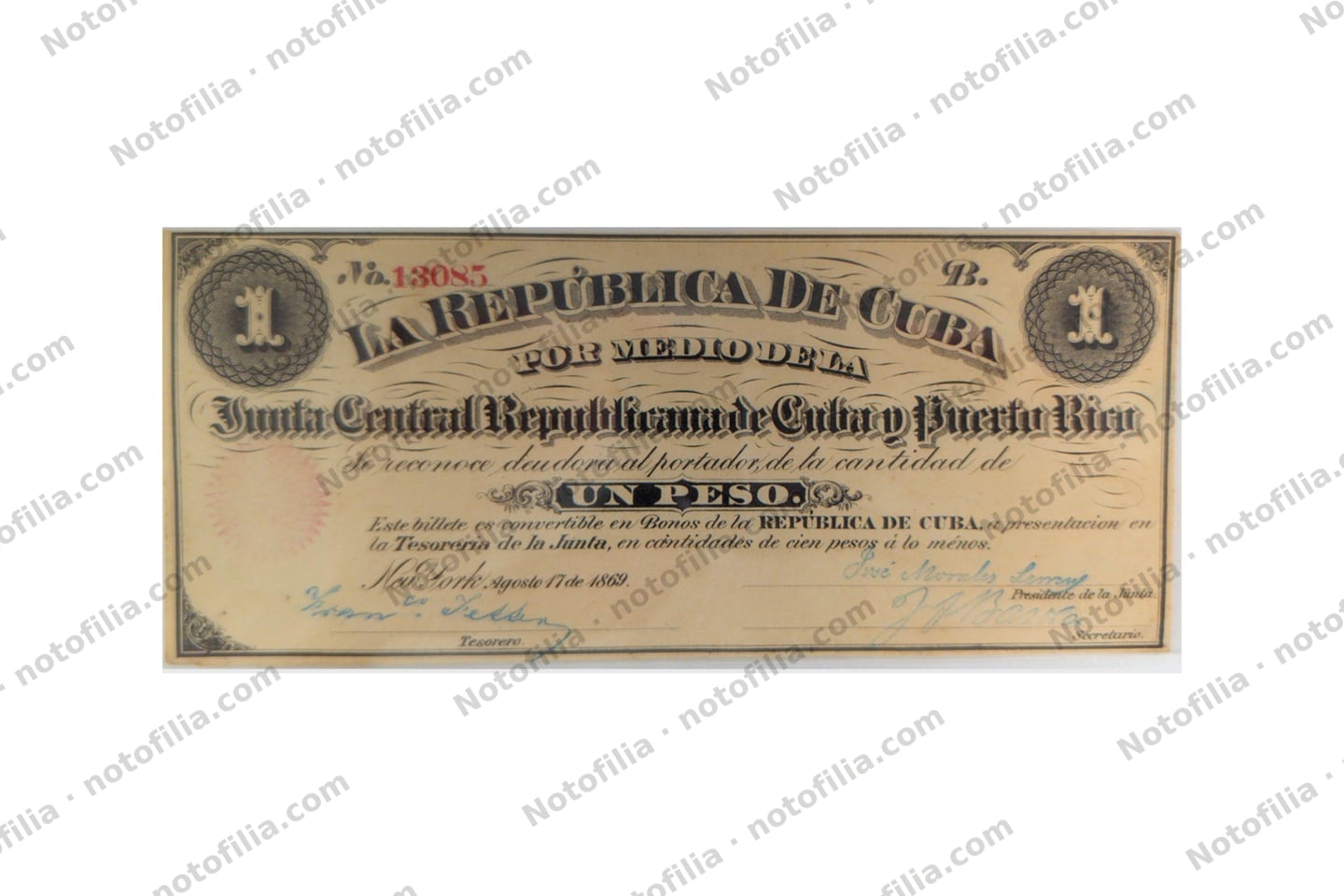
Circulating one-peso note of the Central Republican Board of Cuba and Puerto Rico, printed in New York on 17 August 1869. No. 13085, series B — revolutionary currency convertible into Republic of Cuba bonds.
Catalog facts
- Pick reference
- P#61
- Serial number
- N.º 13085 · serie B
- Signatures
- José Morales Lemus (Board President); J. M. Bassora (Secretary); the Treasurer (autograph signature)
- Condition
- Unslabbed; toning, stains, and edge wear (private collection)
- Printage
- Printed in New York, 17 August 1869. Circulating note of the Central Republican Board of Cuba and Puerto Rico (Pick 61–64: 1, 5, 10, and 20 pesos). Convertible into Republic of Cuba bonds upon presentation at the Board Treasury in amounts of at least one hundred pesos. This record does not invent a printage for the type or for No. 13085.
Face
Back
The note
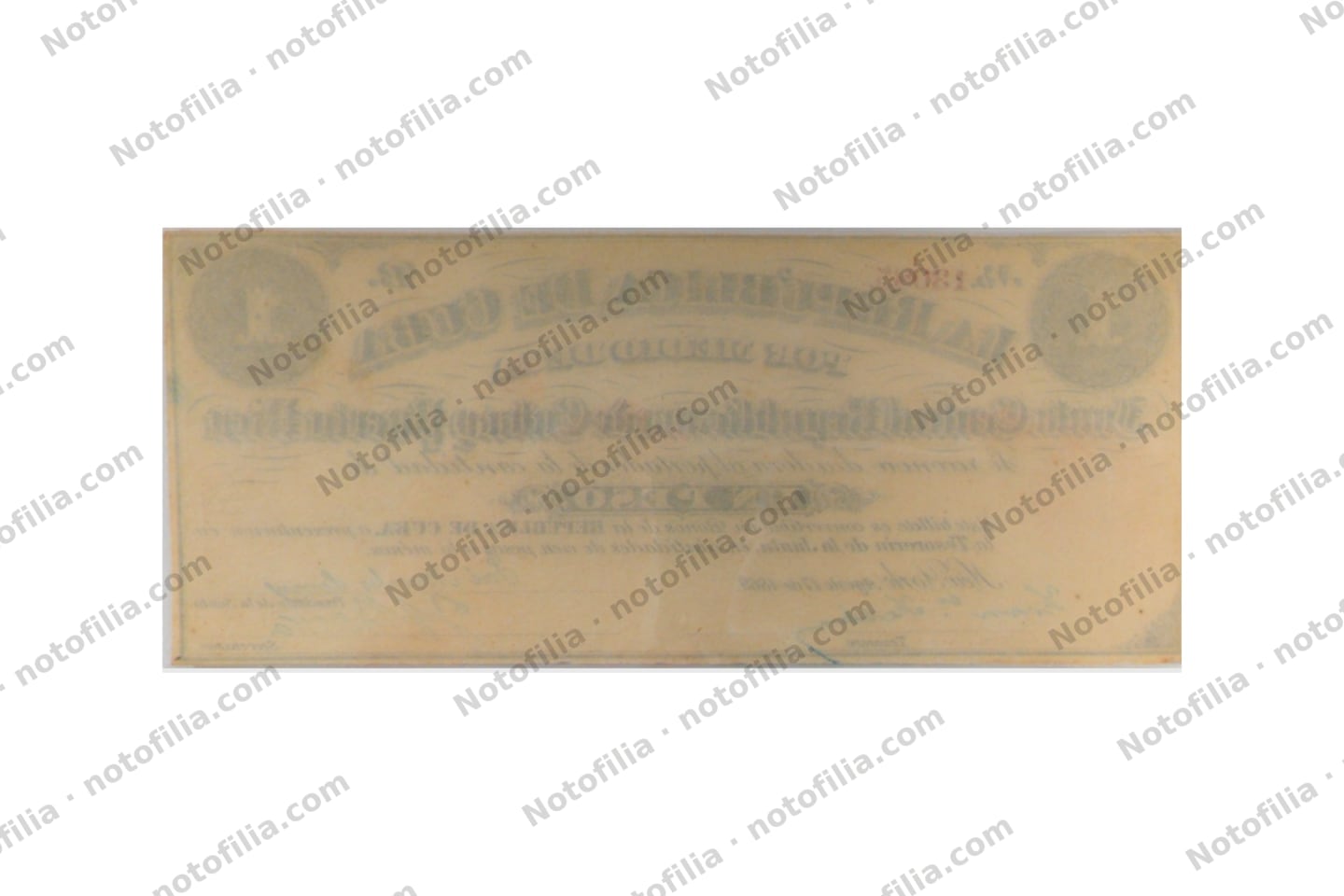
On 17 August 1869 the Central Republican Board of Cuba and Puerto Rico — political, diplomatic, and financial headquarters of the insurgency from New York, chaired by José Morales Lemus with secretary Dr. José Francisco Basora — issued this series of circulating notes (Pick 61–64: 1, 5, 10, and 20 pesos) as revolutionary currency during the Ten Years’ War. Unlike the provisional contribution receipt of June — a fundraising instrument for variable amounts — this one-peso note is fixed-denomination bearer paper, recognized by the Board as debt convertible into Republic of Cuba bonds “upon presentation at the Treasury of the Board, in amounts of at least one hundred pesos.” The face heads LA REPÚBLICA DE CUBA POR MEDIO DE LA Central Republican Board of Cuba and Puerto Rico, centers UN PESO in decorative type, carries red No. 13085, series letter B at upper right, and the date New York, August 17, 1869. Circular medallions with the numeral 1 flank the promissory text. Signers are José Morales Lemus as Board President, J. M. Bassora as Secretary, and the Treasurer with an autograph signature. The back shows the main text in show-through from the thin paper — typical of these nineteenth-century notes printed on one side —; the face No. 13085 is this piece’s identifier. The Board thus linked Cuban and Puerto Rican anti-colonial politics in the New York exile: weeks earlier, in June 1869, Morales Lemus and Basora had been arrested under U.S. neutrality laws, yet the August issue continued the revolutionary financial strategy.
Scarcity and printage
Pick 61–64 catalogues the Board’s four circulating denominations of 17 August 1869 (1, 5, 10, and 20 pesos). Numismatic sources describe limited New York issues during the Ten Years’ War; in June 1869 Morales Lemus and Basora were arrested under U.S. neutrality laws. No. 13085 is an ordinary serial. This record does not invent a printage.
Population
An independent census for No. 13085 has not been verified. The note is shown unslabbed, with toning and wear consistent with a nineteenth-century working note.
Sources
- Numismondo — Cuba P#61–64 (1869 circulating notes) (opens in a new tab)
- Encyclopedia.com — José Morales Lemus (1808–1870) (opens in a new tab)
Central Board presidency and June 1869 arrest under U.S. neutrality laws.
- EBSCO — Cuba’s Ten Years’ War (opens in a new tab)
- Sedwick Coins — Central Republican Board of Cuba and Puerto Rico (1869) (opens in a new tab)
- The E-Sylum — 1869 Military Junta of Cuba Currency (opens in a new tab)
- Bank Note Museum — Puerto Rico (opens in a new tab)
Puerto Rican issues and Central Board in the New York exile context.
Related pieces
Other records from the same issuer or era in this case.