Production
Polymer
Polímero
Polymer, in notaphily, is a banknote’s plastic substrate — almost always biaxially oriented polypropylene, often Guardian — instead of cotton paper. It takes a clear window, a longer life in wet circulation, and optical effects paper does not match. It is not Tyvek. It is not a varnish on cotton. Australia began ordinary circulation in 1988; Canada, Malaysia, England, and China, among others, followed with their own families. A polymer commemorative does not mean the whole everyday series is plastic.
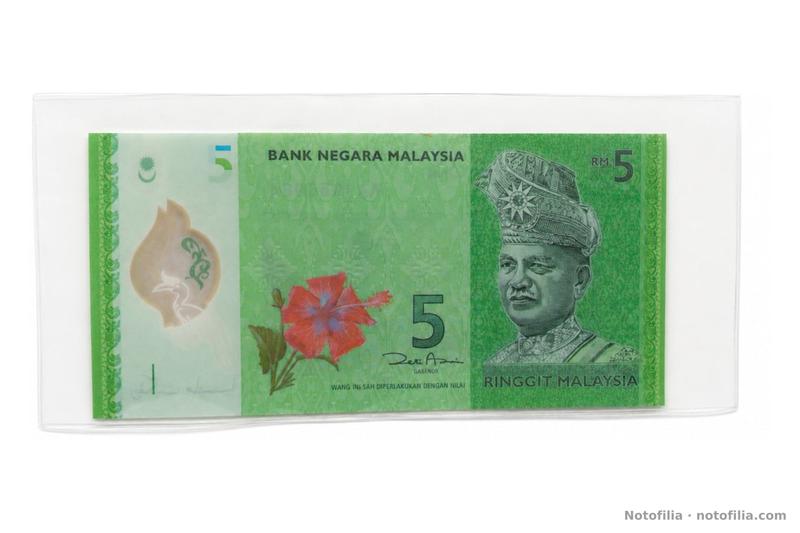
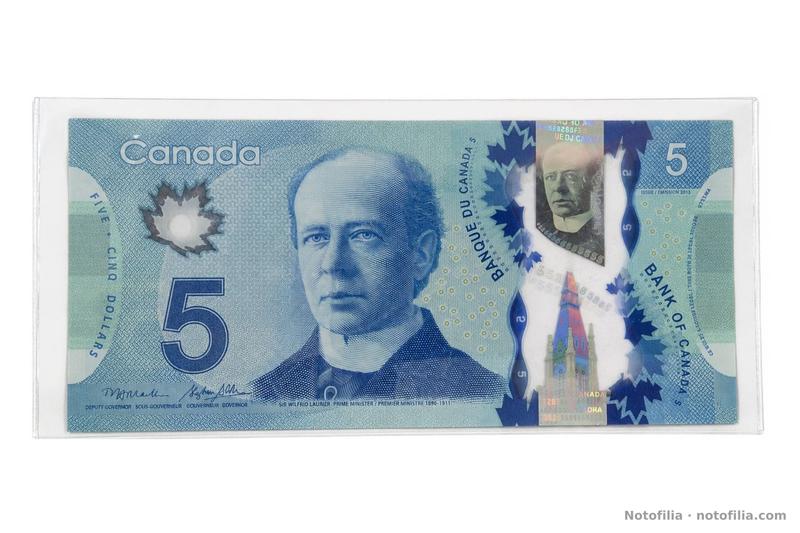
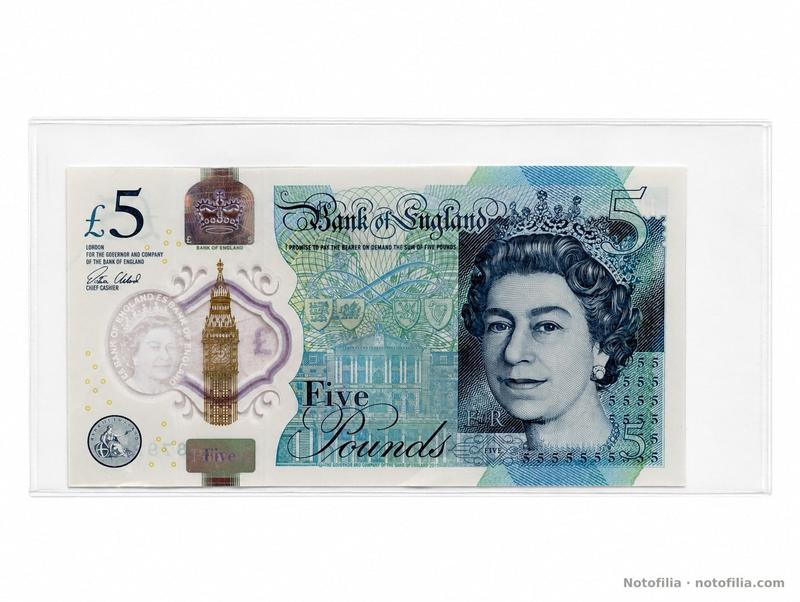
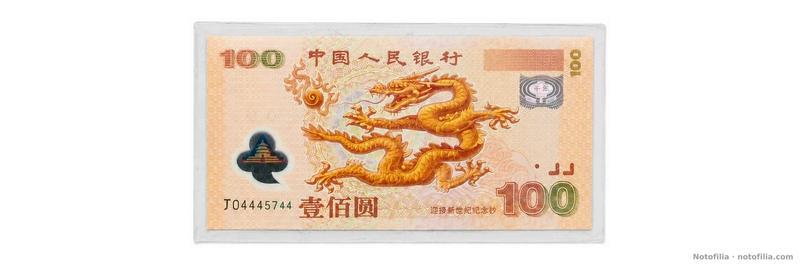
This collection publishes four examples. The millennium 100-yuan (Pick 902), 28 November 2000, serial J04445744, the People’s Republic’s first polymer note, Temple of Heaven window. The Distinctively Malaysia RM5 (Pick 52a, 2012), serial AA 1955984, hornbill window. The Bank of Canada Frontiers $5 (Pick 106b), 7 November 2013, serial HBM0828003, Laurier and Canadarm2. The Bank of England £5 (Pick 394), 13 September 2016, serial AC04 879241, Churchill on the back. All in sleeves, unslabbed; no prefix is a ZA replacement or a low serial.
Polymer does not erase the issuer or the Pick. A 2024 Charles III £5 would be another type; this record is Elizabeth II and Victoria Cleland. Colombian BanRep paper in this case remains cotton. The glossary crosses polymer with Guardian, window, and OVD, and leaves Tyvek and hybrid substrate anchored on the index. None of that plastic is for sale.
Four examples are not a world census of polymer: they are the ones this case has photographed. China commemorates; Malaysia, Canada, and England circulate. Colombian BanRep paper in the catalogue remains cotton. Anyone looking for Tyvek or a hybrid will find those terms anchored on the index, not a second hollow URL.
Examples in the collection
See also: Substrate , Tyvek , Guardian , Clear window