Discipline
Numismatics
Numismática
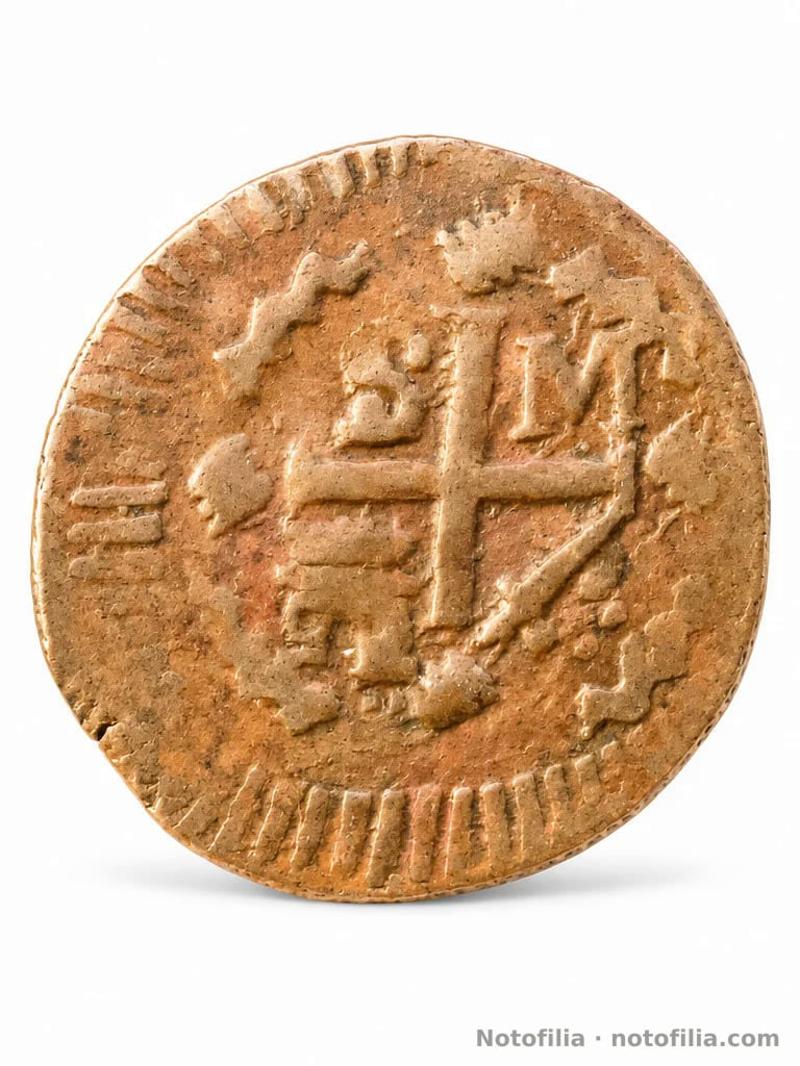
Numismatics is the study of struck coin — and, broadly, of medals and paper. At Notofilia the numismatics case is reserved for what was minted: mint, alloy, edge, fineness, assayer. Notaphily has its own door. The 1761 Utrecht ducat — gold .986, 3.47 g, 21.7 mm, KM# 7.4 — is slabbed by NGC, certificate 4685927-012, AU Details for edge filing. The 1820 Santa Marta copper cuartillo is royalist siege money, Hernández 11, unslabbed. They are not banknotes.
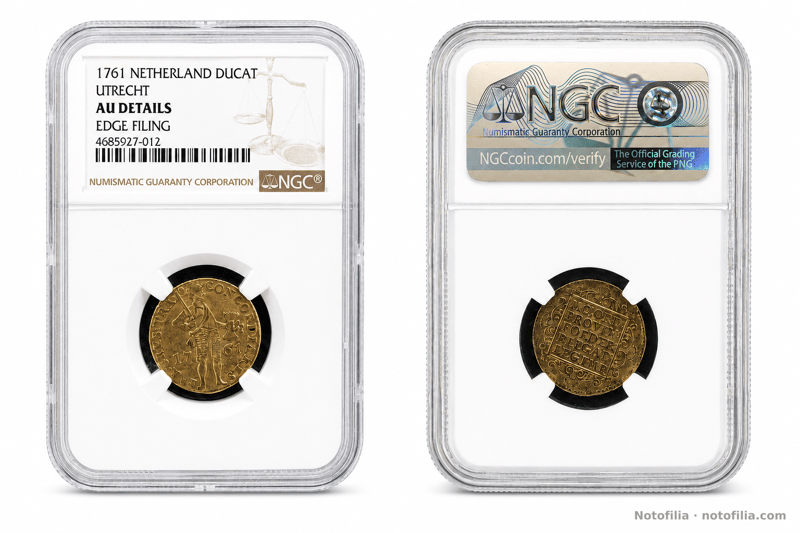
A Santafé pillar 8 reales would be Colombian colonial numismatics; this collection does not yet publish that disc. The Casa de Moneda Museum highlights the 1762 patacón; a Heritage lot with PCGS certificate 37262548 is a comparable, not a holding. Confusing an auction record with a catalogue piece is the error the duplicate rule is there to prevent.
Numismatics shares with notaphily the Sheldon scale, encapsulation, and the discipline of not inventing mintages. BanRep publishes coin production by year and denomination; that is not the mintage of one variety. The glossary term opens the Netherlands and Colombia-numismatics cases, and leaves paper on the other side of the threshold.
Notofilia’s numismatics does not mix a trade ducat with a printed peso oro. One is a mint disc; the other, a banknote legend. The numismatics and notaphily doors exist so those cases are not crossed. When a Santafé pillar dollar arrives it will have a coin record, not a paper one. Until then the 1820 copper and the 1761 gold suffice to show mint, metal, and certificate without inventing an 8 reales.
Examples in the collection
See also: Notaphily