Design
Optically variable device (OVD)
Dispositivo ópticamente variable (OVD)
An optically variable device (OVD) is a security feature whose appearance changes with the angle of light or view: colour-shifting ink, holographic foil, a SPARK patch, or a window with optical relief. It is not decoration. An OVD forces a counterfeiter to reproduce an effect that photocopying and flat printing do not give. Optically variable ink (OVI) — printed, green to purple when tilted — is distinct from foil and from SPARK, another family of magnetic pigments. On polymer the clear window often carries an engraved or laminated OVD.
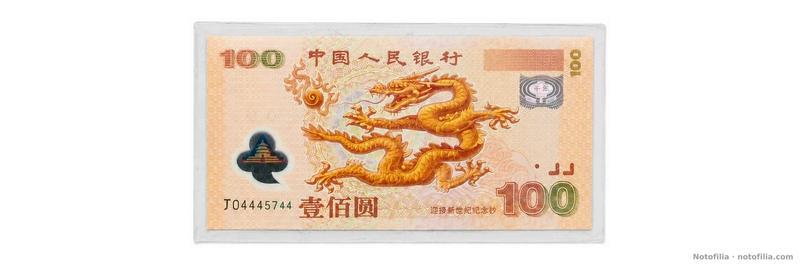
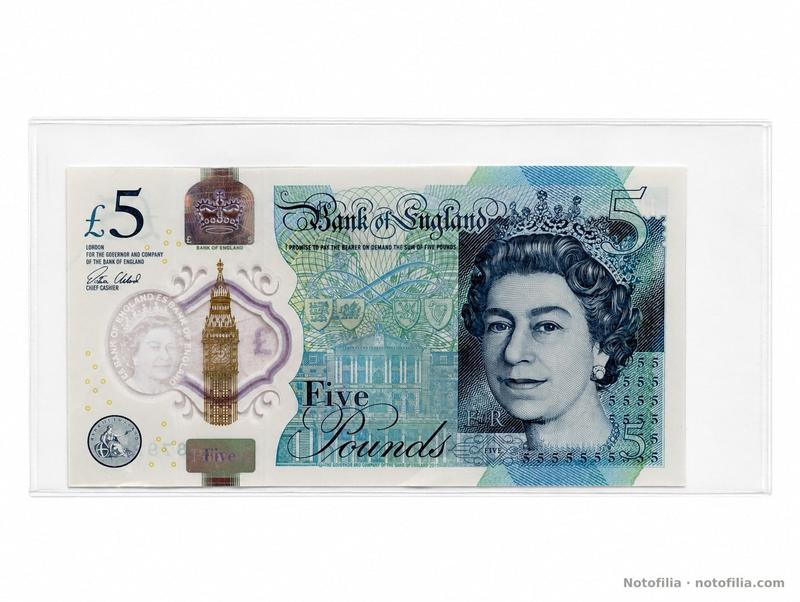
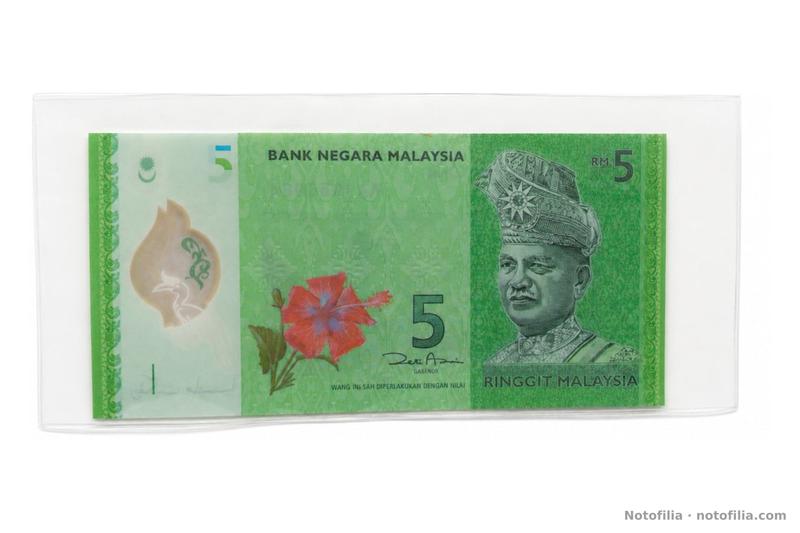
The Standard Catalog and The Banknote Book note an OVD when the type carries one; an effect the record does not describe is not invented here. This collection’s millennium 100-yuan (Pick 902) shows, at upper right, an optically variable device with the characters 千年, besides the Temple of Heaven window. The Churchill £5 carries a BLENHEIM foil patch and Elizabeth Tower in the window. The Malaysian RM5 combines a window with a hornbill silhouette, crescent, and star. None of those records publishes a price or a census of fakes.
On recent Colombian paper the Imprenta de Billetes has used iridescent inks and threads; a specific OVD is not asserted here on a Pick if the note page does not name it. The term covers the set: OVI, foil, SPARK, hologram, and optical window. For the collector the test is to tilt the example under a point light — never with solvents or lamps that heat polymer. If the colour does not shift, it is not OVI; if the foil is missing or replaced, grade and originality are in doubt, and only a slab documents that reading.
Examples in the collection
See also: Iridescent / metallic ink , Optically variable ink (OVI) , SPARK , Foil patch