Published
Source: La Nueva España (opens in a new tab)
Felipe Mateu Llopis, the professor who saved Spain’s numismatic treasure
La Nueva España recalls his 1943 Oviedo chair and how, in November 1936, he hid pieces from the MAN’s Numismatic Cabinet — including Peter I’s great dobla — from a gold requisition.
- Reviewed by
- Yezid Acosta
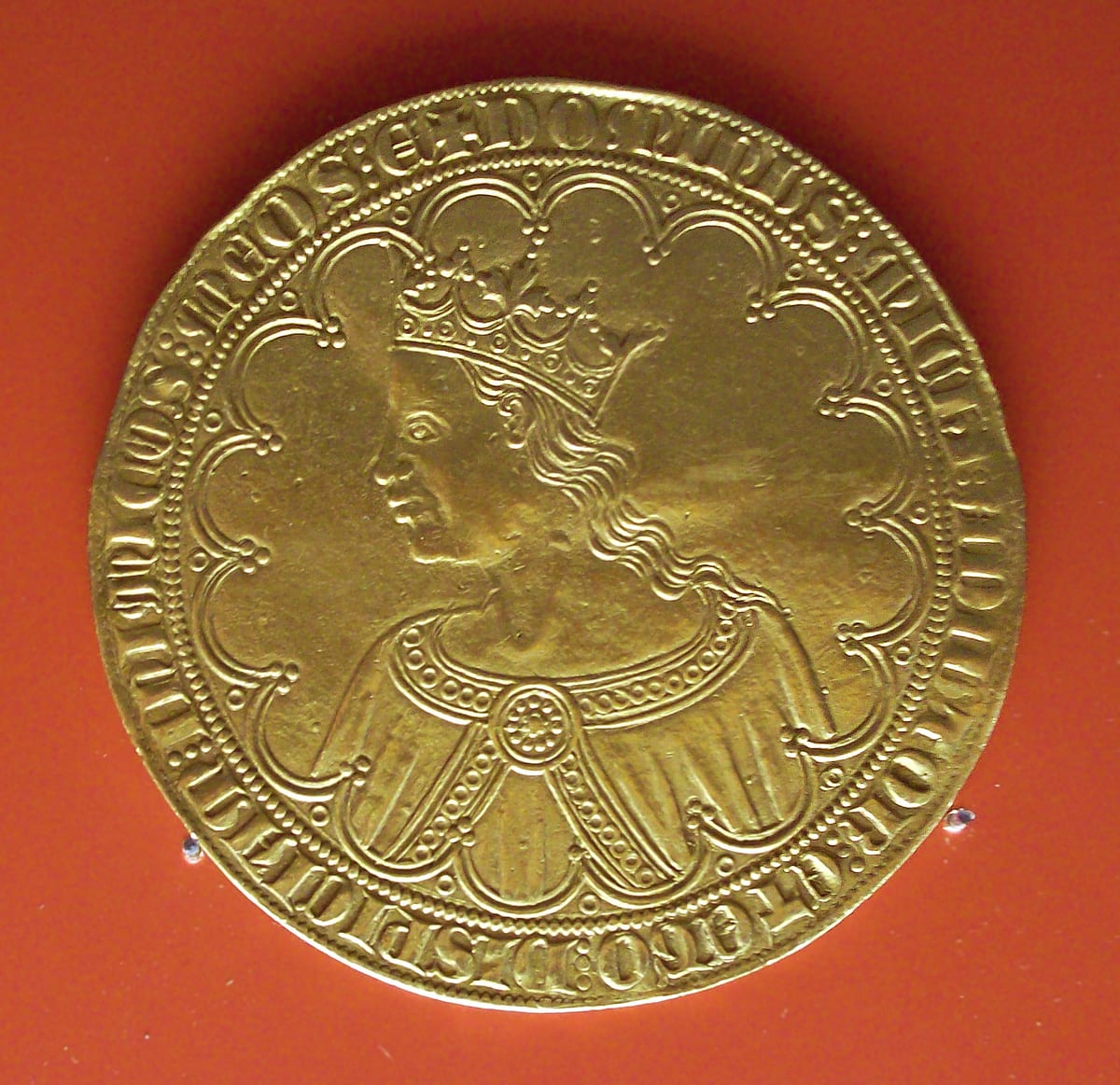
La Nueva España (5 September 2026) profiles Felipe Mateu Llopis (Valencia, 15 November 1901): archaeologist, archivist, palaeographer, numismatist, and professor. The Asturian daily places him, however briefly, at the University of Oviedo, where in 1943 he took the chair of Palaeography and Diplomatics. The episode that drives the note is not that post: it is what he did in Madrid in November 1936, when the Numismatic Cabinet of the National Archaeological Museum was about to be emptied.
The cabinet under the bombs
Mateu took his doctorate at Madrid’s Universidad Central in 1927, with the extraordinary prize, and in 1930 entered the Facultative Corps of Archivists, Librarians and Archaeologists. The cabinet in his care held, LNE says, some 160,000 coins and about 15,000 medals: Greek, Roman, Visigothic, Andalusi dinars, medieval reales, Habsburgs and Bourbons. Each tray was an inventory. Losing the order, the paper writes, meant undoing decades of work.
On the afternoon of 4 November 1936 the under-secretary of Public Instruction, Wenceslao Roces, arrived at the museum with officials and militiamen. The order was to remove the gold holding at once. Mateu, the conservator in charge, delayed deliveries, hid examples and, with his colleague Felipa Niño, also a conservator, concealed coins in chests on the ground floor and in corners of the offices.
What stayed and what left on the Vita
Among what did not leave the museum were the quaternio of Augustus, Peter I of Castile’s gold gran dobla (Seville, 1360), and Philip IV’s centén. What the Republican government did take, LNE records, was 2,796 gold coins — 15.908 kg — plus 67 medals, 242 Arab coins and 322 Visigothic pieces that were not weighed, and silver. The cargo went on the yacht Vita to Mexico; many pieces never returned.
In May 1939 Mateu wrote a report on what had happened. The document, in the MAN’s files, is the main source for reconstructing the episode, though for decades it was barely read.
The Oviedo chair
Tired of Madrid, he took the Oviedo chair in 1943. That same year he moved to Valencia and then to Barcelona. LNE does not present him as the excavator of a famous site, but as someone who stopped part of the heritage from being scattered. More detail in La Nueva España (opens in a new tab).
Primary sources
Source: La Nueva España (opens in a new tab)
Editorial policy, sources, and valuation
Comments
Share your view. Comments appear after they are reviewed.
Loading comments…