Published
Source: AlbertoNews (opens in a new tab)
598 gold coins in a can in Krkonoše
AlbertoNews and Infobae (7 September 2026) return to the February 2025 find: 598 gold coins on the Krkonoše foothills. The US$330,000 figure is a press estimate, not a hammer price.
- Reviewed by
- Yezid Acosta
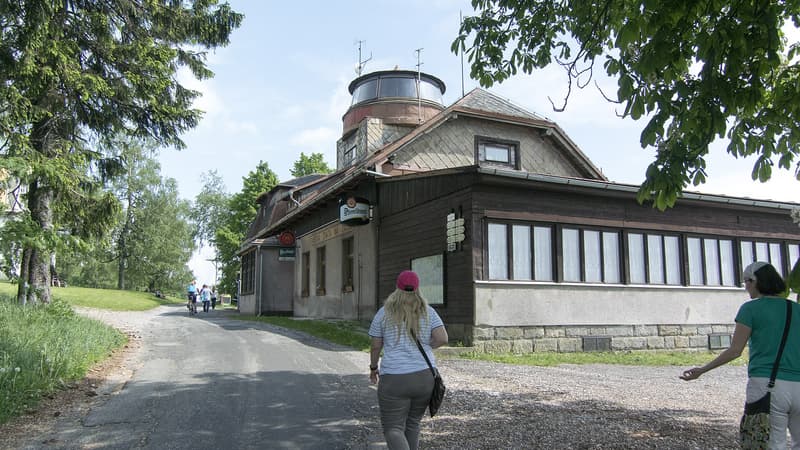
AlbertoNews returns — with the same text as Infobae (opens in a new tab) on 7 September 2026 — to a February 2025 find. Two anonymous hikers, on a shortcut in the Krkonoše mountains, saw an aluminium can set in a stone wall. Inside were 598 gold coins in eleven columns, wrapped in black cloth. A metre away, an iron box held, according to that report, 16 gold cigarette cases, ten bracelets, a comb, a chain with a key, a powder compact, and a silver-mesh bag. They took the group to the Museum of Eastern Bohemia (Muzeum východních Čech) in Hradec Králové.
Figures that are not a hammer
AlbertoNews and Infobae put the group at more than US$330,000 (“estimated value through 2025”) and calculate a finder’s reward of up to 10 % — about US$33,000 if that appraisal holds. It is not an auction result or a collection valuation: it is a press estimate. CNN (opens in a new tab) (20 May 2025) attributes to museum numismatist Vojtěch Brádle some 8 million Czech koruna (about US$360,000 then) for the metal of the coins alone, 3.7 kg. The hoard’s total weight, in those reports, is about seven kilograms.
On 30 January 2026 the Hradec Králové regional government (opens in a new tab) said the Puncovní úřad (Assay Office) had confirmed the gold: 5,230.56 g of fine gold in the whole deposit, at CZK 2,237.50 per gram on the day of the find. We do not convert that figure into dollars. The non-coin objects tested numbered 34, and all were gold. CNN spoke of 17 cases; Infobae of 16. We leave the discrepancy in view.
Dates and countermarks
Infobae and AlbertoNews date the strikes between 1808 and 1915 and place half in the Balkans and the other half in France, with pieces from Belgium, the Ottoman Empire, Russia, Romania, and Italy. There is almost no Central European coin — and no German one — despite the findspot. CNN, by contrast, names a 1921 piece as the latest. The regional museum is more cautious: Brádle says that, with certainty, the hoard was buried after 1921. Austro-Hungarian countermarks applied in Serbia or Bosnia in the 1920s and 1930s set a floor; they do not prove the year of burial.
Miroslav Novák (CNN spells it Novak), head of archaeology at the museum, raised the period before the Second World War — Czech and Jewish families leaving the borderland — or 1945, when the Germans left. None of the hypotheses is proven. The inventory does not belong to Notofilia’s virtual collection.
Ownership and display
In the Czech Republic an archaeological find belongs to the regional administration. CNN notes that the finder’s reward depends on metal value or historical appraisal; the 10 % and the US$33,000 are Infobae/AlbertoNews arithmetic, not the kraj statement. The museum plans a public exhibition; in January 2026 the non-coin objects still needed conservation. More detail in AlbertoNews (opens in a new tab).
Primary sources
- AlbertoNews — can with 598 gold coins (opens in a new tab)
- Infobae — the same report (7 September 2026) (opens in a new tab)
- CNN — Hikers find mysterious stash of gold (20 May 2025) (opens in a new tab)
- Hradec Králové Region — the Assay Office confirms the gold (30 January 2026) (opens in a new tab)
Source: AlbertoNews (opens in a new tab)
Editorial policy, sources, and valuation
Comments
Share your view. Comments appear after they are reviewed.
Loading comments…