Published
Source: COPE Jaca (opens in a new tab)
In Jaca, a Sancho Ramírez dinero marked “Jaca” does not go below €6,000
COPE Jaca covers Juan Carlos Moreno’s tours at the Diocesan Museum: an ox at 18 sueldos, Jaca billon, and auction quotes through 13 September.
- Reviewed by
- Yezid Acosta
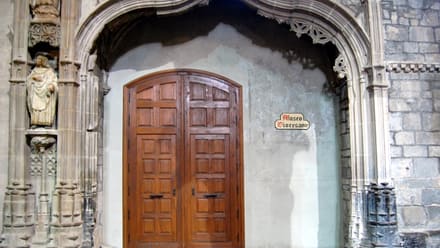
COPE Jaca (4 September 2026) returns to the Diocesan Museum with Juan Carlos Moreno of the Sancho Ramírez Association: guided visits case by case, free at 18:00, through 13 September. The show — Las monedas que vivieron nuestra historia — was covered by Diario del Alto Aragón on 29 August; COPE lingers on medieval equivalences and on what a Jaca dinero costs today.
The ox at 18 sueldos
Moreno explains the panel el valor de la vida, from Ramiro I around 1040 to 1495: the cost of a mule, a warhorse, or a butchered animal. “The ox was worth 18 sueldos,” he says, and one had to carry “a leather pouch with more than two hundred dineros” to buy it. Twelve dineros made a sueldo jaqués, a unit of account. Sancho Ramírez dineros were struck in billon — silver and bronze — the sheen depending on how much silver each issue held. The originals, tiny, surprise visitors beside modern jewellery reproductions.
From €150 to €6,000
At auction, Moreno says, a medieval dinero inscribed Aragón usually sits between €150 and €300. The Sancho Ramírez dinero engraved Jaca — the design reproduced in the pavement of Calle Carmen — “costs no less than six thousand euros.” That is not this week’s hammer on a named lot: it is the threshold the guide gives for that legend. Iberian coins more than two millennia old, with thinner specialist demand, sit near €200 or €300; nineteenth- and twentieth-century coins in fleur de coin can reach seven figures.
The tours also warn against looting with a metal detector. Legal paths are specialist dealers and accredited sales; at open markets, Moreno recalls being sold a fake Julius Caesar denarius. Anyone who finds Roman coins in the fields (Nero, Vespasian) should keep them on velvet, without harsh mounts, somewhere cool and dry. More detail in COPE Jaca (opens in a new tab) and in the opening report.
Source: COPE Jaca (opens in a new tab)
Editorial policy, sources, and valuation
Comments
Share your view. Comments appear after they are reviewed.
Loading comments…