Published
Source: Mundiario (opens in a new tab)
The Trump dollar is worth a dollar; buying it costs more
Mundiario explains the U.S. Mint paradox: US$1 face, a 25-coin roll at US$61 and a 100-coin bag at US$154.50, plus the Semiquincentennial legal exception and the CCAC dispute.
- Reviewed by
- Yezid Acosta
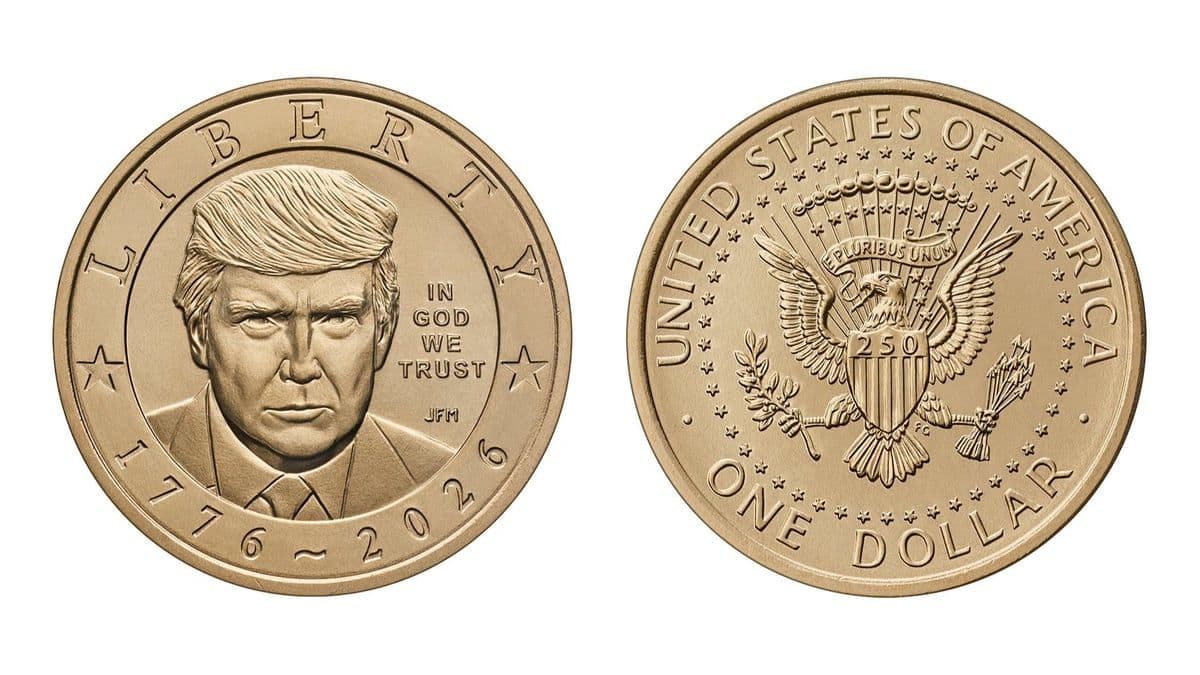
Mundiario (3 September 2026) recaps the paradox of the Semiquincentennial dollar with Donald Trump’s portrait: face value remains one dollar, but buying it from the U.S. Mint costs more. The 25-coin roll is US$61 (about US$2.44 each) and the 100-coin bag is US$154.50 (about US$1.55). The Treasury has not revalued the dollar: the extra is the numismatic packaging of a circulating-quality legal-tender coin.
What is for sale (and what is not gold)
The coin is struck in Philadelphia. The obverse shows Trump with LIBERTY, IN GOD WE TRUST, and 1776 ~ 2026; the reverse, the presidential seal with 250 on the shield. The golden color is manganese brass (copper, zinc, manganese, and nickel): 8.10 g and 26.49 mm, with no gold. Mixed at random into the rolls and bags are 250,000 pieces struck on 4 July with a “July 4th” privy mark.
The cited authority is the Circulating Collectible Coin Redesign Act of 2020, which lets the Treasury Secretary issue a dollar emblematic of the 250th anniversary. The usual precedent is the 1926 Sesquicentennial half dollar with Calvin Coolidge. Mundiario also notes Treasury talk of a $250 bill with Trump’s portrait: that is an announced intention, not a circulating issue.
The CCAC and the Oregon suit
The note reports that the Citizens Coinage Advisory Committee (CCAC) was left out of the final design choice, and that several members alleged they were not consulted. The Treasury, according to Mundiario, said it had given “reasonable opportunities” to review sketches.
An Oregon collector, retired lawyer James Rickher, sought to block the issue. A federal judge denied a preliminary injunction in June because he had not shown concrete personal harm; that ruling did not decide whether the coin is lawful. Roll and bag stocks, the source says, were on replenishment or backorder when the note ran.
More detail in Mundiario (opens in a new tab) and in the virtual-queue report.
Source: Mundiario (opens in a new tab)
Editorial policy, sources, and valuation
Comments
Share your view. Comments appear after they are reviewed.
Loading comments…